Cervical cancer is one of the most preventable types of cancer, yet misconceptions about its symptoms can delay diagnosis and treatment. Knowing what signs to look for and which common beliefs are false could make all the difference. In this article, we’ll debunk widespread myths about cervical cancer symptoms, clarify what’s normal and what’s not, and explain how regular screening plays a crucial role in protecting your health.
Cervical cancer is the 4th most common cancer in women around the world1, but it is also one of the most preventable cancers. Unfortunately, there are many misconceptions out there, leaving people misinformed and potentially worried about being checked. This article hopes to bust some of those myths.
Understanding Cervical Cancer and Its Symptoms
What is cervical cancer, and how does it develop?
Cervical cancer happens when the cells lining the cervix, the lower part of the uterus that opens into the vagina, grow uncontrollably, forming a tumour. It’s most common in women aged 30-35, though anyone with a cervix, at any age, can be affected2.
Nearly all cervical cancers are caused by strains of the Human Papillomavirus (HPV)1. Some high-risk strains can change the deoxyribonucleic acid (DNA) inside the cells and cause them to behave abnormally. Over time, this may lead to the development of tumours3. Fortunately, cervical cancer is amongst some of the most preventable cancers with HPV vaccines and cervical screenings (smear tests) routinely available on the NHS4,5.
Common risk factors for cervical cancer include experiencing childbirth at an earlier age, having multiple births, or being on the combined contraceptive pill for over 5 years. Other risk factors include things that weaken your immune system, like Human Immunodeficiency Virus (HIV) or smoking4.
Early symptoms – what to look out for
Though not always the case, early signs of cervical cancer may include:
- Unusual vaginal bleeding, for example, after sex, between periods, or after menopause6.
- Pain in the pelvis (between the hips), lower back, lower stomach area, or during intercourse6.
- Changes in vaginal discharge, such as colour or smell6.
If you have any of these symptoms, contact your general practitioner (GP).
Why symptoms often go unnoticed
In a lot of cases, the very early stages of cervical cancer show no symptoms at all7. When they do arise, they are rather vague and could be attributed to all sorts of conditions, including fibrosis, endometriosis, or being perimenopausal6.
To catch cervical cancer early, the NHS has a robust screening service for HPV and cervical cancer, as well as HPV vaccines8. Together, these make cervical cancer one of the most preventable cancers.
Myth-Busting Common Misconceptions
Myth 1 – Cervical cancer always shows obvious symptoms
- Early cervical cancer often shows no or very vague symptoms that could be caused by other factors6,7.
- If you do notice sudden changes, contact your GP.
Myth 2 – Only women with multiple sexual partners are at risk
- HPV can be contracted from a single partner.
- The risk exists regardless of sexual history.
Myth 3 – A normal cervical screen test (smear test) means you're in the clear forever
- A smear test only tells you if you are free of HPV or abnormal cells at that moment.
- HPV and cervical cancer can affect anyone with a cervix at any age.
- Regular screening, every 5 years if HPV negative8, is vital for early diagnosis to ensure the best possible treatment.
The Role of Screening and Diagnostic Tools
Cervical screening (smear test): what it does and doesn’t do
A smear test is an opportunity to identify anything abnormal before it becomes a problem. They screen for HPV and pre-cancerous changes. Although not a diagnostic tool for cancer itself, they are important for early detection and treatment.
HPV testing and its importance
HPV is responsible for around 99.8 per cent of cervical cancers9. New tests can now detect high-risk strains of HPV10 To improve accessibility to areas of the country with low screening numbers, self-swabbing tests have also been developed11. Additionally, scientists have also developed vaccines that can target high-risk HPV strains12, providing another preventative tool.
Imaging and diagnostic follow-up: the role of MRI or CT
If abnormal pre-cancerous cells are detected, a small sample can be taken for analysis. If further investigation is required, different imaging techniques can be used:
- A pelvic Magnetic Resonance Image (MRI) can be used to identify and establish the size of the growth/tumour13.
- A Positron Emission Tomography/ Computed Tomography (PET/CT) scan can help evaluate the spread of cancer throughout the body and help inform doctors which treatment plan is appropriate13.
- Both of these methods can also be used to monitor patients over time.
Taking Charge of Your Cervical Health
Regular screening saves lives
The NHS recommends screening every 3–5 years, depending on age and HPV status8,14. Younger women and those in underserved communities are less likely to attend a screening15, which could be due to embarrassment, discomfort during exams, or being misinformed.
Self-care and body awareness
You know your body better than anyone else. If you notice abnormal changes or the appearance of any of these symptoms, you should contact your GP.
These changes could be attributed to many other things than cervical cancer, but the GP will be able to put you at ease and catch anything early.
Anxiety and embarrassment should not be barriers to routine health checks. The best way to combat this is to open a conversation and educate people about reproductive health.
When to see your GP and what to expect
If you experience persistent changes in vaginal discharge, experience painful sex, or irregular bleeding, you should contact your GP.
The earlier the diagnosis, the more treatable cervical cancer is, and the less invasive the treatment.
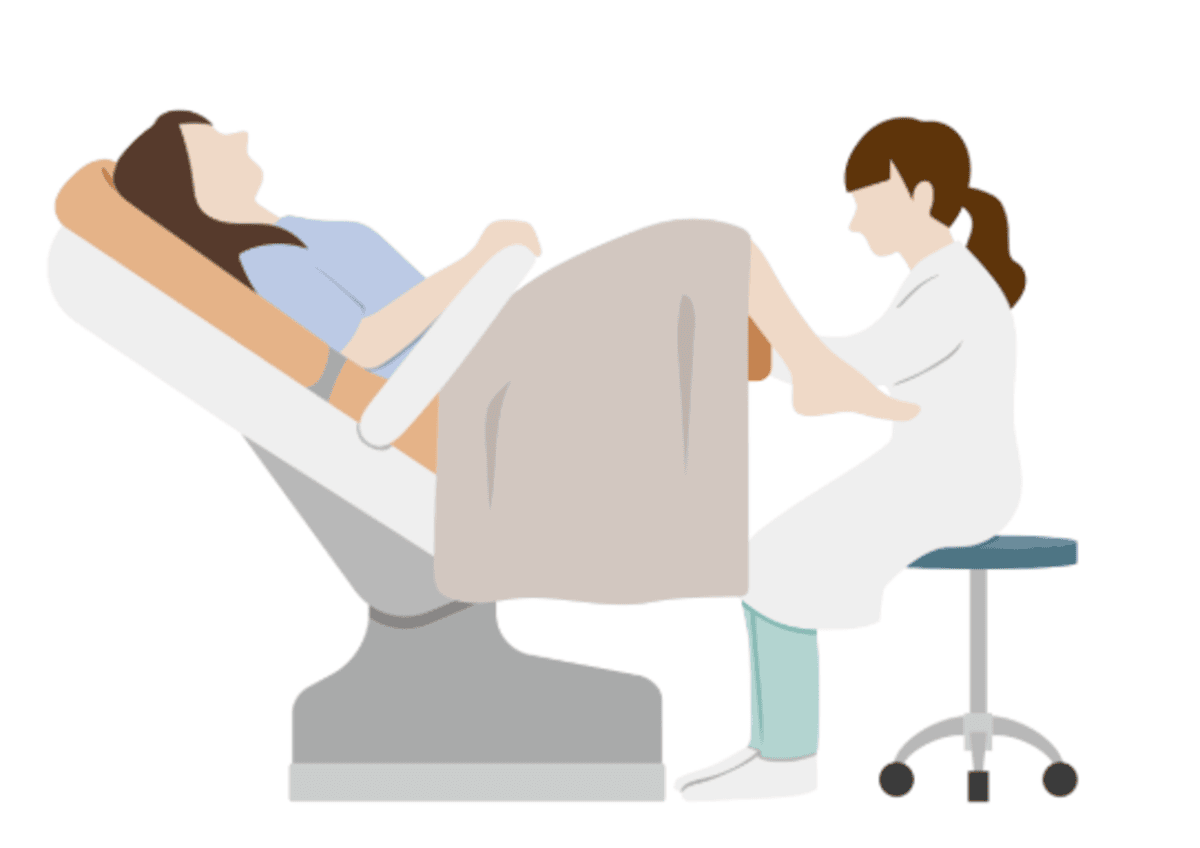
What happens at a smear test16:
- You will be asked to undress from the waist down in private.
- The nurse or doctor will ask you to lie back on a bed with the small sheet provided for modesty.
- The nurse or doctor will return and will usually ask you to put your feet together and let your knees fall to the sides.
- Using a smooth, tube-shaped tool called a speculum, the nurse or doctor will insert and open the vagina to see your cervix. A small amount of lubricant may be used.
- Using a small, soft brush, a cell sample will be collected from the cervix.
- The nurse or doctor will close and remove the speculum.
- They will leave you to get dressed.
The entire appointment should take less than 10 minutes. The NHS has an excellent video resource.
Conclusion
Cervical cancer is highly preventable, but awareness is key.
Understanding the real symptoms, challenging common myths, and keeping up with regular screening can save lives.
By staying informed and proactive, you take your health into your own hands, and encouraging others can help them to do the same.
Ezra’s MRI can screen for early signs of potential issues in 14 organs, all in a fast, painless session. Book your Ezra Scan today.
Understand your risk for cancer with our 5 minute quiz.
Our scan is designed to detect potential cancer early.
References
1. WHO. Cervical cancer. December 2, 2025. Accessed January 12, 2026. https://www.who.int/news-room/fact-sheets/detail/cervical-cancer
2. NHS. What is cervical cancer? nhs.uk. September 18, 2024. Accessed January 13, 2026. https://www.nhs.uk/conditions/cervical-cancer/what-is-cervical-cancer/
3. Cancer Research UK. Does HPV cause cancer? | Cancer Research UK. Accessed January 13, 2026. https://cancerresearchuk.org/about-cancer/causes-of-cancer/infections-eg-hpv-and-cancer/does-hpv-cause-cancer
4. NHS. Causes of cervical cancer. nhs.uk. September 18, 2024. Accessed January 12, 2026. https://www.nhs.uk/conditions/cervical-cancer/causes/
5. NHS. Your cervical screening results. nhs.uk. July 14, 2023. Accessed January 12, 2026. https://www.nhs.uk/tests-and-treatments/cervical-screening/your-results/
6. NHS. Symptoms of cervical cancer. nhs.uk. September 18, 2024. Accessed January 13, 2026. https://www.nhs.uk/conditions/cervical-cancer/symptoms/
7. Macmillan Cancer Support. Cervical cancer - stages, symptoms, diagnosis, treatment. Accessed January 13, 2026. https://www.macmillan.org.uk/cancer-information-and-support/cervical-cancer
8. NHS England. NHS England » NHS rolls out more personalised cervical screening for millions. June 10, 2025. Accessed January 13, 2026. https://www.england.nhs.uk/2025/06/nhs-rolls-out-more-personalised-cervical-screening-for-millions/
9. Cancer Research UK. Cervical cancer risk | Cancer Research UK. Accessed January 13, 2026. https://www.cancerresearchuk.org/health-professional/cancer-statistics/statistics-by-cancer-type/cervical-cancer/risk-factors
10. Fashedemi O, C. Ozoemena O, Peteni S, et al. Advances in human papillomavirus detection for cervical cancer screening and diagnosis: challenges of conventional methods and opportunities for emergent tools. Anal Methods. 2025;17(7):1428-1450. doi:10.1039/D4AY01921K
11. Lim AWW, Deats K, Gambell J, et al. Opportunistic offering of self-sampling to non-attenders within the English cervical screening programme: a pragmatic, multicentre, implementation feasibility trial with randomly allocated cluster intervention start dates (YouScreen). eClinicalMedicine. 2024;73. doi:10.1016/j.eclinm.2024.102672
12. Joura EA, Giuliano AR, Iversen OE, et al. A 9-Valent HPV Vaccine against Infection and Intraepithelial Neoplasia in Women. N Engl J Med. 2015;372(8):711-723. doi:10.1056/NEJMoa1405044
13. Zhu Y, Shen B, Pei X, Liu H, Li G. CT, MRI, and PET imaging features in cervical cancer staging and lymph node metastasis. Am J Transl Res. 2021;13(9):10536-10544.
14. NHS. When you’ll be invited for cervical screening. nhs.uk. July 14, 2023. Accessed January 12, 2026. https://www.nhs.uk/tests-and-treatments/cervical-screening/when-youll-be-invited/
15. Bennett KF, Waller J, Chorley AJ, Ferrer RA, Haddrell JB, Marlow LA. Barriers to cervical screening and interest in self-sampling among women who actively decline screening. J Med Screen. 2018;25(4):211-217. doi:10.1177/0969141318767471
16. What happens at your cervical screening appointment. nhs.uk. July 14, 2023. Accessed January 13, 2026. https://www.nhs.uk/tests-and-treatments/cervical-screening/what-happens/


