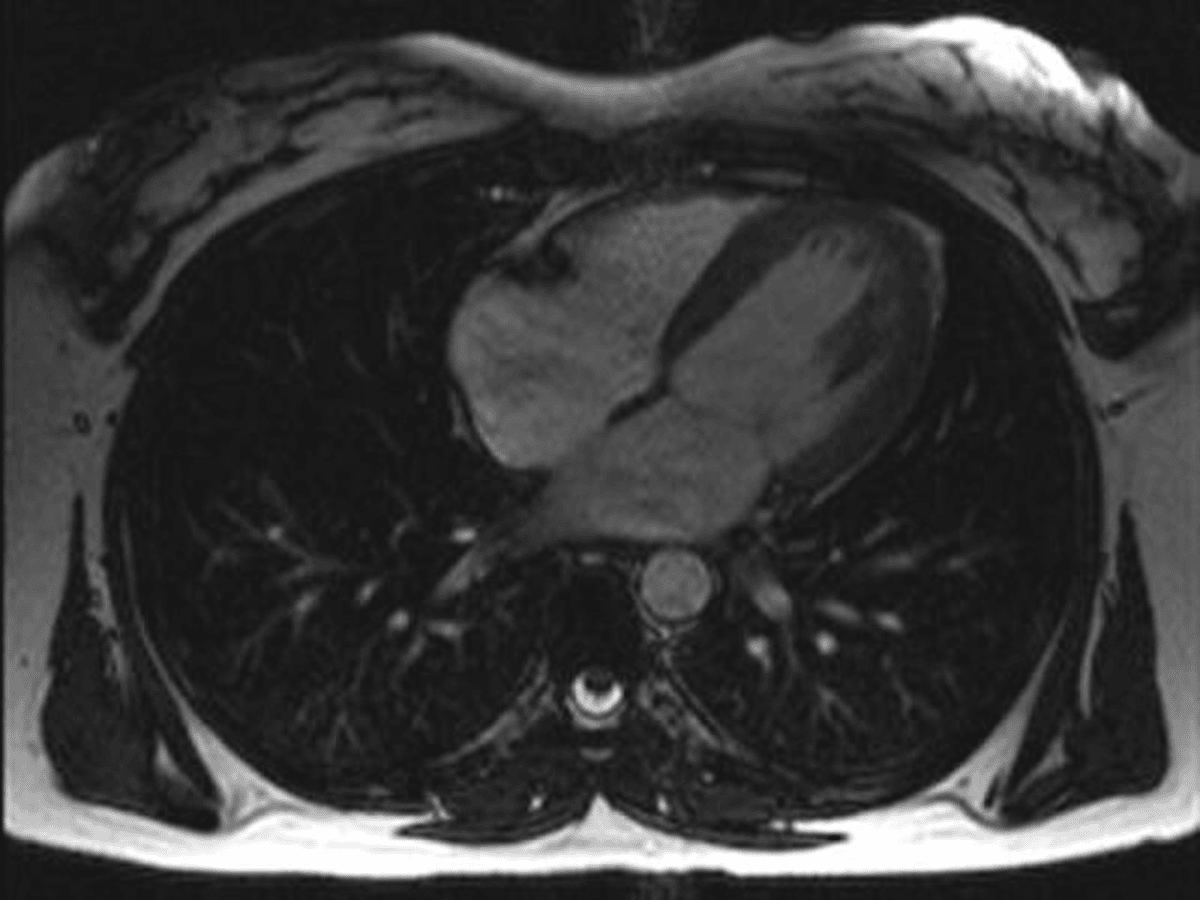
Heart disease is still the leading cause of death globally, but what if you could see the warning signs before symptoms appear? Advances in MRI technology now make it possible to detect subtle changes in heart structure and function. In this article, we’ll explore how MRI scans can be used to gain a clearer picture of your heart’s future and empower you to take early, proactive steps toward long-term heart health.
Cardiovascular disease is a broad term for conditions affecting the heart and blood vessels. There are four main types of this disease: coronary heart disease, stroke, peripheral arterial disease, and aortic disease1. In the UK, coronary heart disease is one of the top three leading causes of death2.
There are a variety of lifestyle choices that can increase the risk of cardiovascular disease, including inactivity and smoking. However, early detection screening can find warning signs of cardiovascular disease in advance. Through this, proactive lifestyle changes can be made to minimise the progression of this disease and increase quality of life before more serious consequences take hold.
What Is a Cardiac MRI and How Does It Work?
MRI for the heart explained
An MRI (Magnetic Resonance Imaging) scan utilises magnetic and radio waves to build a detailed picture of organs inside the body. A cardiac MRI specifically provides insight into the structure, blood flow, and function of the heart3.
Using a cardiac MRI, your doctor can look for:
- Congenital heart disease
- Cardiomyopathy
- Coronary heart disease
- Heart valve disease
- Growths in the heart
- Damage to the heart muscle
- Blood flow to the heart
What makes MRI different from other heart tests?
There are a number of other heart tests available, including electrocardiogram (ECG), echocardiogram (Echo), and Computed Tomography (CT) scan; however, these tests offer different results4.
CT and MRI scans are the only way to create detailed, multi-dimensional images of the heart. While a CT scan is faster, an MRI creates more detailed images of soft tissue, such as the heart, and is free from radiation5.
What a Cardiac MRI Can Reveal About Your Future
Detecting early signs of heart disease
Not all cardiovascular disease is obvious. It’s possible that individuals remain symptomless until a major incident occurs. It is estimated that, every week in the UK, 12 apparently fit and healthy people aged 35 and under die from an undiagnosed heart condition6.
Cardiomyopathy, a condition in which the walls of the heart thicken, is the most common cause of sudden death in young people6. The high-resolution images taken by an MRI can detect thickened heart walls, in addition to blood flow abnormalities, that might be present even though an individual is asymptomatic.
Spotting risks before symptoms show
Using MRI scans as an early diagnostic tool can detect changes before symptoms are obvious. A UK study conducted MRI scans of over 1,000 volunteers and demonstrated that those with an enlarged mass of the heart's left ventricle had an increased risk of future cardiovascular events7.
MRI scans can also detect heart muscle inflammation, scarring, and any reduction in the amount of blood that the heart's left ventricle squeezes out with each beat (known as ejection fraction)8. These are all early warning signs of cardiovascular disease, despite the fact that clinical signs may not be present.
A tool for prevention, not just diagnosis
Diagnosis is not enough when it comes to cardiovascular disease. Cardiovascular disease is responsible for one in four premature deaths in the UK9. Preventative strategies need to be undertaken to prevent cardiovascular disease from occurring in the first place.
MRI scans can form part of the preventative health strategy to minimise the risk of serious cardiovascular events. Using MRI, the health of the heart can be assessed before serious symptoms arise, and required lifestyle changes can be addressed before problems escalate.
Who Should Consider a Heart MRI?
Family history and genetic risk
If you have a parent, brother, or sister who has had chest pain (angina) or a heart attack before the age of 60, you are considered to have a family history of cardiovascular disease1.
A family history of cardiovascular disease warrants investigation. Conditions like cardiomyopathy and arrhythmias that affect the heart structure and heart rhythm, respectively, can be inherited10. It is estimated that inherited cardiomyopathy affects 260,000 people in the UK, although many may not know they have it11.
Athletes, biohackers, and health-conscious individuals
If you’re interested in optimising your performance, monitoring stress, or ruling out pathologies, MRIs can offer insight into internal processes like heart muscle health, subtle inflammation, or early functional changes invisible to standard tests or wearable technology12.
Cardiac MRIs can precisely measure ejection fraction, detect scarring, and distinguish benign, exercise-induced cardiac adaptations from pathological condition8,13. As MRIs operate without radiation, they offer the ability to obtain repeated checks. This empowers individuals to continue to optimise their long-term health.
When symptoms are unclear or unexplained
You might feel like your symptoms are not serious enough to seek help, but heart failure can manifest in several ways:
- Chest discomfort
- Palpitations
- Breathlessness
- Fatigue
Experiencing these symptoms, particularly if they are persistent or gradually worsen, warrants a visit to your GP14. Cardiac MRIs could also help to rule out abnormalities in heart structure and function when symptoms like this occur.
Summary: Your Heart’s Future Is Worth Seeing Early
Cardiovascular disease is a top cause of death in the UK. Symptoms may not appear until a fatal cardiovascular event occurs. With early detection tools such as cardiac MRIs, heart abnormalities that may have gone unnoticed can be caught earlier, and lifestyle modifications can be made to reduce the risk of future life-changing cardiovascular events.
MRIs provide a safe, long-term option for early detection of cardiovascular risk. Whether you are concerned about heart conditions you may have inherited, looking to optimise your athletic performance, or want peace of mind, cardiac MRIs offer a way to be proactive about your heart health. MRIs also offer more than just a structure and function analysis of the heart; they can offer insight into the health of the whole body.
If you want to take proactive steps toward understanding your health, consider booking an Ezra MRI scan. Our AI-assisted scans can detect potential cancer and over 500 other conditions across up to 14 organs. Get peace of mind in under an hour and contact us today.
Understand your risk for cancer with our 5 minute quiz.
Our scan is designed to detect potential cancer early.
References
1. NHS. Cardiovascular disease. NHS. April 2022. Accessed December 12, 2025. https://nhsuk-cms-fde-prod-uks-dybwftgwcqgsdmfh.a03.azurefd.net/conditions/cardiovascular-disease/
2. World Health Organisation. United Kingdom of Great Britain and Northern Ireland. World Health Organisation. 2021. Accessed December 3, 2025. http://data.who.int/countries/826
3. British Heart Foundation. Cardiac MRI scan. British Heart Foundation. September 2023. Accessed December 12, 2025. https://www.bhf.org.uk/informationsupport/tests/mri-scan
4. Heart UK. Tests and investigations. Heart UK. 2025. Accessed December 12, 2025. https://www.heartuk.org.uk/getting-treatment/tests-and-investigations
5. Florkow MC, Willemsen K, Mascarenhas VV, Oei EHG, van Stralen M, Seevinck PR. Magnetic Resonance Imaging Versus Computed Tomography for Three‐Dimensional Bone Imaging of Musculoskeletal Pathologies: A Review. J Magn Reson Imaging. 2022;56(1):11-34. doi:10.1002/jmri.28067
6. Cardiac Risk in the Young (CRY). A condition which kills young people in their prime. October 23, 2009. Accessed December 3, 2025. https://www.c-r-y.org.uk/a-condition-which-kills-young-people-in-their-prime/
7. Weir-McCall JR, Fitton CA, Gandy SJ, et al. Sex-specific Associations between Left Ventricular Remodeling at MRI and Long-term Cardiovascular Risk. Radiology. 2024;313(2):e232997. doi:10.1148/radiol.232997
8. Topriceanu CC, Al-Farih M, Joy G, et al. The Cardiovascular Magnetic Resonance Phenotype of Lamin Heart Disease. JACC Cardiovasc Imaging. 2025;18(6):644-660. doi:10.1016/j.jcmg.2025.01.004
9. NHS. Cardiovascular disease (CVD). NHS. 2025. Accessed December 12, 2025. https://www.england.nhs.uk/ourwork/clinical-policy/cvd/
10. Inherited heart conditions. British Heart Foundation. 2025. Accessed December 12, 2025. https://www.bhf.org.uk/informationsupport/conditions/inherited-heart-conditions
11. British Heart Foundation. A genetic cure for killer heart muscle diseases. British Heart Foundation. August 2022. Accessed December 12, 2025. https://www.bhf.org.uk/informationsupport/heart-matters-magazine/research/genetic-cure-heart-diseases
12. Grech N, Abela M. The Role of Cardiovascular Magnetic Resonance Imaging in Athletic Individuals—A Narrative Review. J Clin Med. 2025;14(10):3576. doi:10.3390/jcm14103576
13. Petrone A, Minopoli TC, Papadakis M, Sharma S, Finocchiaro G. Differential diagnosis between ‘athlete’s heart’ and cardiomyopathies. Br J Cardiol. 2025;32. Accessed December 12, 2025. https://bjcardio.co.uk/2025/07/differential-diagnosis-between-athletes-heart-and-cardiomyopathies/
14. NHS. Heart failure - Symptoms. NHS. May 2022. Accessed December 12, 2025. https://nhsuk-cms-fde-prod-uks-dybwftgwcqgsdmfh.a03.azurefd.net/conditions/heart-failure/symptoms/


