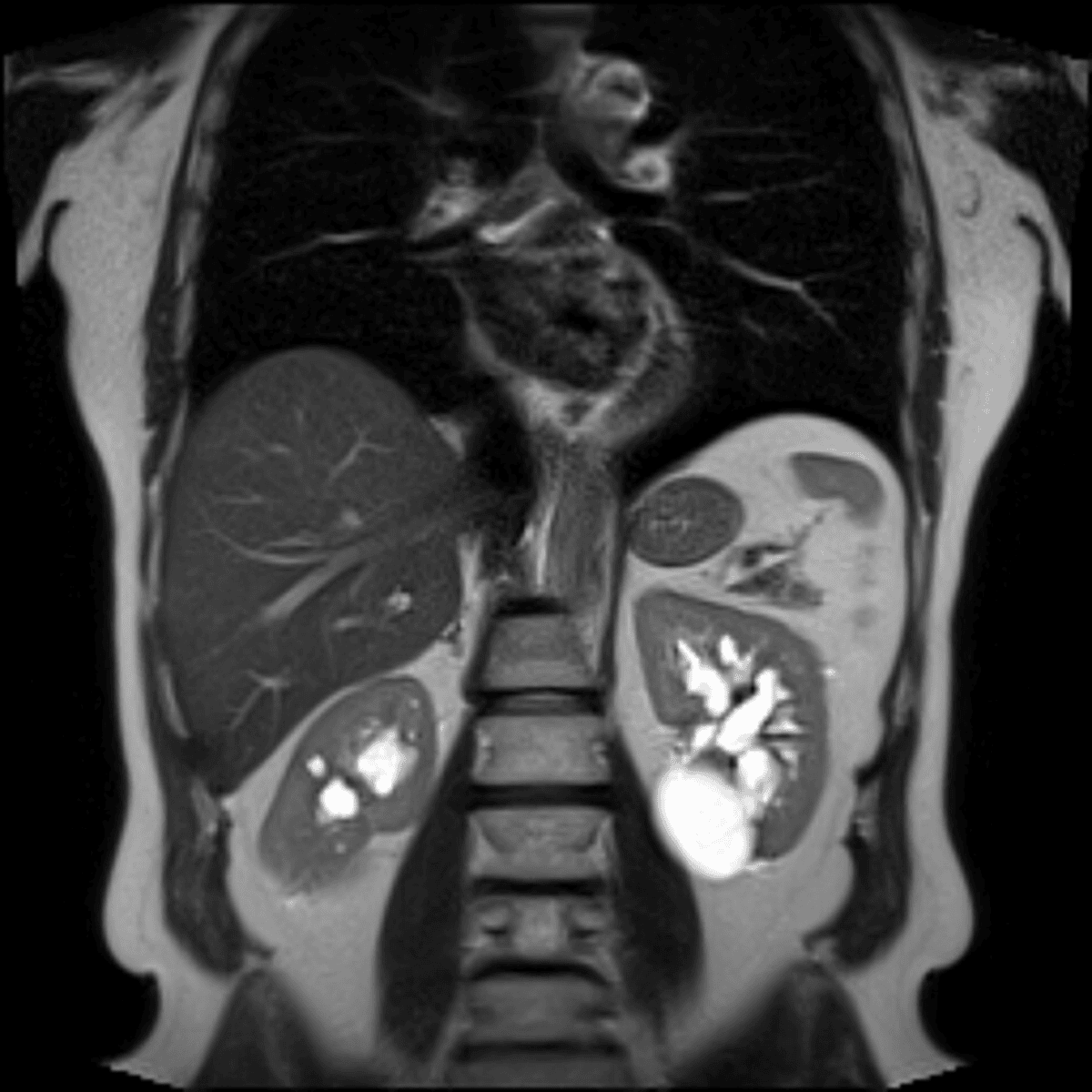
Kidney cancer often develops silently, with few noticeable symptoms in its early stages. That’s why imaging plays a critical role in detecting tumours before they spread. Among the available technologies, MRI has emerged as a powerful, non-invasive tool. In this article, we’ll explore whether MRI can help catch kidney cancer early, and what this means for people who want to take a proactive approach to their health.
There are around 13,900 new cases of kidney cancer diagnosed each year in the UK. The 10-year survival rate after diagnosis is around 55.6 per cent, largely because this silent cancer is often diagnosed at a late stage1. To improve these outcomes, early detection methods such as Magnetic Resonance Imaging (MRI) or Computed Tomography (CT) can be used to identify tumours sooner. This article will clarify which imaging techniques are available and why they are important for diagnosing kidney cancer earlier.
Why Early Detection Matters
Kidney cancer often goes unnoticed
Most kidney cancers are found by accident. They are usually identified during imaging of other organs. CT and MRI scans of other abdominal organs may reveal early growths of the kidney, which can lead to further investigation2.
Due to a lack of obvious symptoms or a national screening programme, kidney cancer detection often occurs once the disease has already progressed. Cancer Research UK says that 34 per cent of kidney cancer cases are preventable through lifestyle changes, highlighting the importance of awareness and early detection1.
Better outcomes when caught early
If kidney cancer is caught early enough, before it can spread, surgical removal of tumours will often result in a 5-year survival rate of around 90 per cent3.
Early-stage cancers are often treated with the removal of the tumour, along with some of the healthy tissue that surrounds it, to make sure the entire tumour is gone. The less tissue removed, the more kidney function that is saved4.
If the cancer has progressed, more of the kidney has to be removed, sometimes the whole kidney. This reduces survival and increases the chances of developing chronic kidney disease and complications involving the heart later in life5.
At-risk groups to watch
Kidney cancer has no single cause, but lifestyle and genetic factors are both contributing factors. Around 40 per cent of cases may be linked to modifiable factors6. Risk factors include4,6,7:
- Being aged 60+, most diagnoses are in those over 75
- Being overweight or obese
- Smoking
- High blood pressure
- Kidney stones
- Chronic kidney disease
- Long-term dialysis
- Diabetes
- Thyroid cancer
- Family history
- Genetic conditions
- Von Hippel-Lindau syndrome (VHL): up to 70 per cent risk of kidney cancer, usually multiple tumours on both kidneys by age 407.
- Tuberous Sclerosis Complex (TSC): 2-5 per cent kidney cancer risk, but more often causes benign growth or cysts on the kidneys in 80 per cent of patients8.
- Birt-Hogg-Dubè syndrome (BHD): 15-30 per cent kidney cancer risk4.
If you have multiple risk factors, including one or more direct family members with kidney cancer, ask your GP about screening, even if you do not have symptoms.
How MRI Works in Kidney Cancer Detection
What MRI can detect
MRI is a technique that uses powerful magnets and radio waves to create detailed pictures of the kidneys. It can be used to spot cancerous and non-cancerous growths, smaller than 1cm, showing tumour size, location, and spread to nearby areas9–11.
MRI vs. CT scan
Both MRI and CT scans detect kidney cancer effectively, but each has strengths that make them suitable for different situations.
A CT scan uses multiple X-rays, which are merged into a 3D image. Contrast dye can be used to give more detail and help distinguish important features. CTs are typically used first because they are quick, the equipment is readily available, and they are relatively cheap to perform. However, CT involves low-dose radiation from X-rays, which doctors limit in younger people or those needing repeat scans9–11.
MRI scans take slightly longer (30-60 minutes). They are less common but offer more detail in soft tissue without the use of contrast dye or X-ray radiation. MRI is ideal for12:
- Spotting tiny lesions that CTs might miss.
- Distinguishing between benign and cancerous growths.
- Identifying if any blood vessels are being affected by the tumour to plan surgery.
- Imaging patients with poor kidney function or CT contrast allergies.
In short, CT handles most initial diagnoses efficiently, while MRI steps in for detailed follow-up when every detail counts10,13.
When contrast is used
Contrast can be used to give extra detail to scans, highlighting blood vessels and tumours.
For CT scans, contrast is usually iodine-based, which is generally safe but is cleared by the kidneys. Poor kidney function increases the risk of kidney injury, and some people have iodine allergies12.
MRIs sometimes use a silvery white metal known as gadolinium for contrast, but it is not often needed. Non-contrast MRI detects most kidney masses effectively12.
Ezra's multi-organ screening MRI uses no contrast for maximum safety, especially important for those with poor kidney function, where gadolinium can carry rare complication risks12.
Can MRI Be Used for Screening?
For high-risk individuals
MRI is recommended selectively for people with hereditary risks like VHL, BHD, or TSC syndromes, where kidney cancer often develops early and silently.
These patients typically start annual scans in their 20s or 30s, even without symptoms, catching tumours before they spread14.
Multi-organ MRI screening
Services like Ezra's multi-organ MRI screen 14 organs, including the kidneys, identifying abnormalities before symptoms appear. This proactive approach empowers early action and better outcomes for those who choose private screening.
Conclusion
MRI provides detailed, radiation-free imaging for early kidney cancer detection, which is particularly valuable for high-risk individuals and complex cases.
While MRIs are not yet standard NHS screening for everyone, they offer proactive health insights for those who want to stay ahead of silent threats.
Ezra's Multi-Organ MRI screens kidneys alongside 13 other organs, empowering early action against cancers that might otherwise go unnoticed until later stages.
Understand your risk for cancer with our 5 minute quiz.
Our scan is designed to detect potential cancer early.
References
1. NHS. Symptoms of kidney cancer. nhs.uk. June 15, 2023. Accessed February 4, 2026. https://www.nhs.uk/conditions/kidney-cancer/symptoms/
2. Vasudev NS, Wilson M, Stewart GD, et al. Challenges of early renal cancer detection: symptom patterns and incidental diagnosis rate in a multicentre prospective UK cohort of patients presenting with suspected renal cancer. BMJ Open. 2020;10(5):e035938. doi:10.1136/bmjopen-2019-035938
3. Cancer Research UK. Cancer Stats Data Hub. September 26, 2025. Accessed January 12, 2026. https://crukcancerintelligence.shinyapps.io/CancerStatsDataHub/_w_defe7cc6a05e447ca04d766f7c099545/_w_0bf5a94f00034809a2181d2fb80fd08b/?_inputs_&nav=%22Incidence%20Breakdowns%20and%20Trends%22&app_select_CancerSite=%22Cervix%22&app_select_Country=%22United%20Kingdom%22
4. Kidney Research UK. Kidney cancer: symptoms, prognosis, treatment, causes and stages. Kidney Research UK. Accessed February 2, 2026. https://www.kidneyresearchuk.org/conditions-symptoms/kidney-cancer/
5. Tan HJ, Norton EC, Ye Z, Hafez KS, Gore JL, Miller DC. Long-term survival following partial vs radical nephrectomy among older patients with early-stage kidney cancer. JAMA. 2012;307(15):1629-1635. doi:10.1001/jama.2012.475
6. Cancer Research UK. Risks and causes of kidney cancer. Accessed February 12, 2026. https://www.cancerresearchuk.org/about-cancer/kidney-cancer/risks-causes
7. NHS. Causes of kidney cancer. nhs.uk. June 15, 2023. Accessed February 12, 2026. https://www.nhs.uk/conditions/kidney-cancer/causes/
8. Mekahli D, Müller RU, Marlais M, et al. Clinical practice recommendations for kidney involvement in tuberous sclerosis complex: a consensus statement by the ERKNet Working Group for Autosomal Dominant Structural Kidney Disorders and the ERA Genes & Kidney Working Group. Nat Rev Nephrol. 2024;20(6):402-420. doi:10.1038/s41581-024-00818-0
9. Baytok A, Ecer G, Balasar M, Koplay M. Computed tomography and magnetic resonance imaging characteristics of renal cell carcinoma: Differences between subtypes and clinical evaluation. J Clin Imaging Sci. 2025;15:10. doi:10.25259/JCIS_160_2024
10. Cancer Research UK. Tests for kidney cancer. Accessed February 12, 2026. https://www.cancerresearchuk.org/about-cancer/kidney-cancer/getting-diagnosed/tests-for-kidney-cancer
11. NHS. Tests and next steps for kidney cancer. nhs.uk. June 15, 2023. Accessed February 12, 2026. https://www.nhs.uk/conditions/kidney-cancer/tests-and-next-steps/
12. Davenport MS, Perazella MA, Yee J, et al. Use of Intravenous Iodinated Contrast Media in Patients With Kidney Disease. Kidney Med. 2020;2(1):85-93. doi:10.1016/j.xkme.2020.01.001
13. Macmillan Cancer Support. Kidney cancer - Macmillan Cancer Support. Accessed February 12, 2026. https://www.macmillan.org.uk/cancer-information-and-support/kidney-cancer
14. Cancer Research UK. Screening for kidney cancer. Accessed February 4, 2026. https://www.cancerresearchuk.org/about-cancer/kidney-cancer/getting-diagnosed/screening


