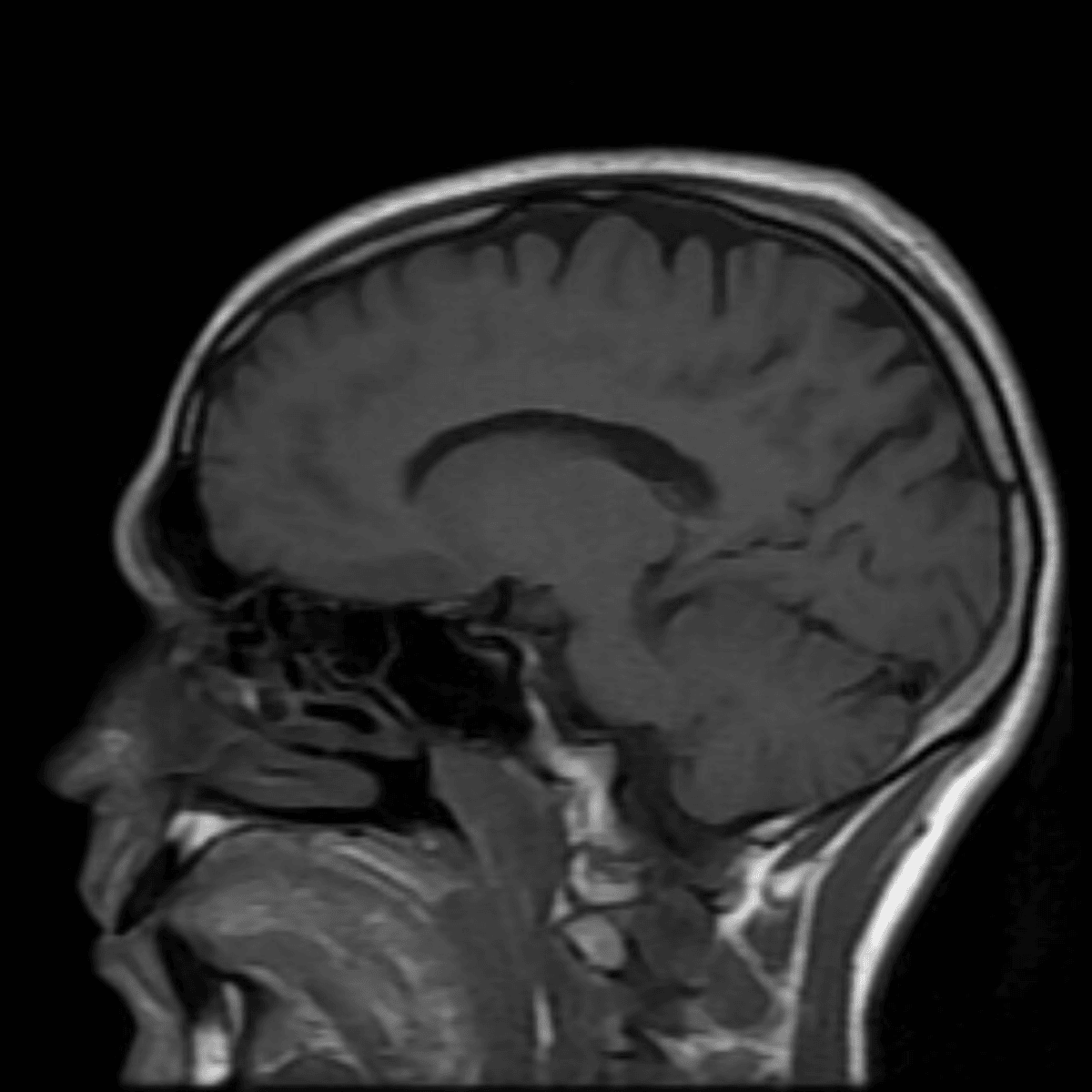
Conditions our MRI scans have found
Encephalomalacia
Encephalomalacia describes softening of brain tissue, usually from a past stroke, trauma or infection, or could be congenital (from birth). The most common cause of encephalomalacia is stroke, which has the same major risk factors that lead to heart disease (high blood pressure, poor cholesterol levels, diabetes and smoking).
Enlarged heart
An enlarged heart (cardiomegaly) refers to a heart that is bigger than normal. This condition may be seen on imaging (e.g. MRI, CT) in individuals with an underlying condition (e.g. high blood pressure, coronary artery disease, inherited disorders, cardiomyopathy) that causes the heart muscle to become thicker or a condition that causes one of the chambers of the heart to dilate, making the heart larger.
Emphysematous changes
Emphysema is when the air spaces/sacs in the lung are damaged and permanently lose their natural elasticity. It is a type of chronic obstructive pulmonary disease (COPD), and is most commonly caused by smoking.
Enlarged tonsils
The tonsils are lymphatic tissues located in the back of the throat. They are part of the body's immune system, functioning similarly to lymph nodes to filter the lymphatic fluid and containing lymphocytes (white blood cells) that help the body fight infection and disease. The causes of tonsillar enlargement include infection (i.e. viral), smoking, gastric reflux and lymphoma. Enlargement of the tonsils in adults usually does not cause symptoms and resolves by itself, but sometimes can be associated with sleep apnea (the momentary stopping of breathing during sleep) or recurrent tonsil infections.
Epiglotic mass
The epiglottis is the leaf-shaped flap of tissue in the throat that prevents food from entering the windpipe and the lungs. Based on your MRI images, there is a mass (growth) at the base of the epiglottis. To determine exactly what this mass is, further imaging is needed.
exophytic pituitary fossa lesion
The pituitary gland is a small gland that sits in the sella turcica, a saddle-shaped depression located in the bone at the base of the skull. It produces hormones that control many different processes in the body, including metabolism, growth and reproduction. “Exophytic” is a term describing abnormal growth outside the usual anatomic boundaries.

Can't find what you're looking for?
Frequently Asked Questions
Unfortunately at this time, we are unable to scan people with pacemakers. There is a risk that the MRI magnetic fields will disrupt its operation, and we don't want that.
There are many different types of implants. We will need to know more about what you have. The good news is that almost all implants are MRI-safe. There is a chance the implant will affect the images we can get from the surrounding tissues.
Yes. Almost all IUDs are MRI-safe. Regardless, we check the MRI safety of all devices. Common MRI-safe IUDs are the Mirena and the Copper T.
Yes you can. There will be extra precautions we will take to ensure your safety while in the machine, so please inform staff before entering the MRI.
Yes. This is completely safe.