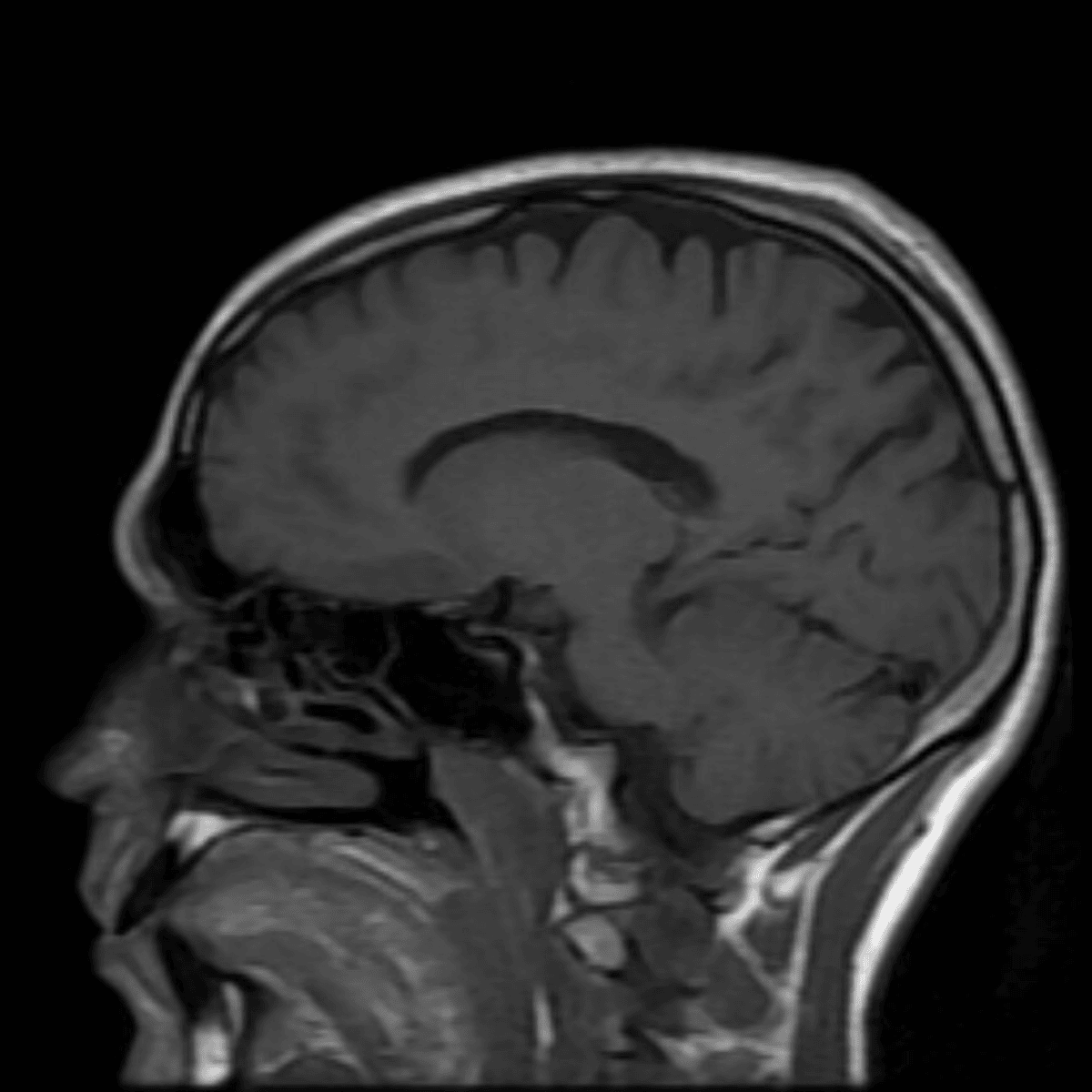
Cancers like pancreatic, liver, and lung often go undetected until it’s too late. But new advances in imaging technology are changing the outlook. Tools like full-body MRI and low-dose CT scans are helping doctors detect tumours earlier, sometimes before symptoms even begin. In this article, we explore how modern imaging is revolutionising early cancer detection, especially for the deadliest and most elusive cancers.
Every January, Less Survivable Cancer Awareness Week highlights specific cancers that are difficult to detect and treat. It raises awareness of signs, risks, and the innovations that could increase the odds for patients. This year, Less Survivable Cancer Awareness Week is 13th - 17th January1.
Currently, up to 25 per cent of total cancer patients in the UK have one of the following six types, known collectively as the Less Survivable Cancers1–3:
- Brain tumours
- Liver cancer
- Lung cancer
- Oesophageal cancer
- Pancreatic cancer
- Stomach cancer
These account for around half of total UK cancer deaths and are often diagnosed late due to having no or very general symptoms4. These are also the reasons why screening options are limited, leaving fewer treatment options when the cancer is identified.
One way to help screen for these cancers earlier is by using modern imaging technologies such as Magnetic Resonance Imaging (MRI), Computed Tomography (CT), and Positron Emission Tomography/Computed Tomography (PET/CT).
The Problem with Detecting Less Survivable Cancers
Late-stage diagnosis is common
These Less Survivable Cancers often have mild or vague symptoms such as fatigue, indigestion, and back pain. These symptoms can easily be mistaken for something very minor, such as stress, digestive issues, or even period pain.
In the case of brain tumours, there may be subtle headaches or small vision changes. These could easily be explained away as dehydration, eyestrain, or needing a new pair of glasses.
Pancreatic cancer often shows no symptoms at all in the early stages, making it one of the hardest cancers to detect. Because the signs are so non-specific and difficult to detect, people are not likely to visit their general practitioner (GP)4 until the disease has progressed.
Even when someone does go to the GP, getting a referral to a specialist can take time. Especially when there are no clear indications as to what is causing the issue. Multiple tests are often carried out to rule out more common conditions before cancer is considered a possibility.
That’s why raising concerns early, even if symptoms seem minor, can make a real difference in what can be done to help them.
Limited screening tools for many cancer types
Unlike breast, bowel, or cervical cancer, there are limited proactive screening options for the six Less Survivable Cancers. Screening programmes rely on tests that have to be cost-effective, accessible to people, and that affect a large number of the population.
Unfortunately, the Less Survivable cancers do not have screening tools as these are still in development. Because they develop deep within the body, early changes and tumours are hard to monitor. There are currently no blood tests that would catch these diseases early. This leaves diagnosis depending on people going to their GP once symptoms appear, which often occurs when the disease is already advanced.
For example:
- Brain tumours are not investigated until the patient is already reporting symptoms.
- Liver cancer screening only covers high-risk groups like those with existing scarring (cirrhosis), leaving many cases unidentified5.
- For pancreatic cancer, which often has no symptoms in the early stages, there are no reliable tests that doctors can use on the general population5.
Why early detection changes outcomes
The earlier a cancer can be diagnosed, the more that can be done to treat it and the better the chance of survival6. The late-stage diagnosis of most of these cancers makes the survival rate 5 years after being diagnosed only around 16 per cent7,8.
Modern imaging techniques can be used to diagnose these cancers early, before symptoms become obvious. This provides patients and doctors with more options of treatment, which could be less invasive, less aggressive, and preserve the patient’s quality of life.
Modern Imaging Techniques That Are Making a Difference
MRI (Magnetic Resonance Imaging)
- MRI scanners are non-invasive, using strong magnets and radio waves to produce detailed images.
- They are excellent for examining soft tissue and are key for identifying tumours in Less Survivable Cancers9.
- The options of functional MRI (fMRI) or contrast-enhanced scans can provide even greater detail9.
- Ezra’s MRI scans 14 organs in under an hour – with no radiation.
CT (Computed Tomography) Scans
- CT scans are non-invasive and work by taking lots of X-rays from different angles and using a computer to compile them into a detailed 3D image9.
- CTs are especially useful for bones, but also for identifying tumours in soft tissue, such as in the liver, lungs, or pancreas.
- Low-dose CT (LDCT) is now standard for lung cancer screening in high-risk groups like smokers. They are capable of identifying tumours smaller than 1cm in size.
- Ezra uses an LDCT to catch potential abnormalities in the lungs early.
PET-CT (Positron Emission Tomography-CT)
- PET scans use a harmless radioactive tracer that can tell how much energy each different cell is using. Cancer cells usually use more energy and show up brighter in the scan10.
- PET-CTs combine the clear imaging provided by a CT scan plus the functional information given by a PET scan11.
- They are excellent for diagnosing the stage of cancer, monitoring how effective any treatment is, and identifying things that other scans may have missed.
Advanced Imaging Innovations
- Artificial Intelligence (AI) is a powerful tool that healthcare professionals use to aid in their efficiency in interpreting scans.
- AI is used to streamline diagnostic workflows by enhancing image analysis accuracy, reducing errors, and accelerating diagnosis, resulting in faster patient outcomes12.
- Ezra uses AI to help radiologists analyse scans faster and with more precision.
These modern scanners are designed to be as comfortable and fast as possible. They are safe, and each usually lasts less than an hour. The scans themselves are painless and can provide results very quickly. For many, knowing early brings peace of mind, clearer next steps, and the best possible outcomes.
Who Can Benefit from Early Imaging?
High-risk individuals
People with key risk factors, such as smoking (lung cancer), those who have a family history of cancer, or certain conditions like hepatitis (liver cancer)5 are considered high risk. Regular imaging can be used to monitor those people before cancer progresses and symptoms develop.
Proactive health seekers
Proactive individuals without symptoms, who seek peace of mind, may want to undergo imaging. Also, those who experience vague, persistent issues such as stomach aches or being unusually tired. People who are over 40 and have no symptoms may want to have a scan to monitor general health, or those over 50 who may want to get ahead of any silent risks to complement suggest general health checks by the NHS13.
Role of imaging after symptom onset
Imaging can be used to confirm a suspected diagnosis by helping healthcare professionals tell the difference between cancerous tumours and benign ones, or how far a cancer may have spread.
These scans can also help doctors decide what the best course of treatment is. For example, they can decide if radiation therapy, chemotherapy, or surgery is the best course of action depending on the spread.
Imaging can also help determine how well a treatment is working by helping them see if the tumour has changed9–11.
Conclusion
Modern imaging technologies like MRI, CT, and PET-CT are revolutionising early detection for Less Survivable Cancers, catching silent threats before symptoms appear.
MRI and CT are valuable tools to spot tumours in soft tissue like the brain, lungs, pancreas, etc., before significant disease progression. These are especially valuable in high-risk individuals who will have better survival odds if the cancer is identified and treated as early as possible.
With Ezra, you can scan 14 vital organs in just one hour. Don’t wait for symptoms. Be proactive about your health today. Book your Ezra scan now.
Understand your risk for cancer with our 5 minute quiz.
Our scan is designed to detect potential cancer early.
References
1. Less Survivable Cancers Taskforce. Less Survivable Cancers Taskforce. Less Survivable Cancers Taskforce. Accessed January 14, 2026. https://lesssurvivablecancers.org.uk/
2. Cancer Research UK. Cancer awareness calendar | Cancer Research UK. Accessed January 14, 2026. https://www.cancerresearchuk.org/health-professional/awareness-and-prevention/cancer-awareness-calendar
3. Less Survivable Cancers Taskforce. The Less Survivable Cancers. Less Survivable Cancers Taskforce. Accessed January 14, 2026. https://lesssurvivablecancers.org.uk/the-less-survivable-cancers/
4. Anthony-Ackery J. Less Survivable Cancers Day. thamesvalleycanceralliance.nhs.uk. January 9, 2023. Accessed January 14, 2026. https://thamesvalleycanceralliance.nhs.uk/less-survivable-cancers/
5. NHS England. NHS England » Implementing a timed HPB cancer diagnostic pathway. Accessed January 14, 2026. https://www.england.nhs.uk/long-read/implementing-a-timed-hpb-cancer-diagnostic-pathway/
6. Cancer Research UK. Why is early cancer diagnosis important? | Cancer Research UK. Accessed January 14, 2026. https://cancerresearchuk.org/about-cancer/spot-cancer-early/why-is-early-diagnosis-important
7. Cancer Research UK. Statistics by cancer type | Cancer Research UK. Accessed January 14, 2026. https://www.cancerresearchuk.org/health-professional/cancer-statistics/statistics-by-cancer-type
8. Brassett D. Less Survivable Cancers Awareness Week 2026 - Guts UK %. Guts UK. January 13, 2026. Accessed January 14, 2026. https://gutscharity.org.uk/2026/01/less-survivable-cancers-awarenesss-week-2026/
9. Winfield JM, Payne GS, deSouza NM. Functional MRI and CT biomarkers in oncology. Eur J Nucl Med Mol Imaging. 2015;42(4):562-578. doi:10.1007/s00259-014-2979-0
10. Cancer Research UK. PET-CT scan. Accessed January 14, 2026. https://www.cancerresearchuk.org/about-cancer/tests-and-scans/pet-ct-scan
11. Kapoor M, Heston TF, Kasi A. PET Scanning. In: StatPearls. StatPearls Publishing; 2025. Accessed January 14, 2026. http://www.ncbi.nlm.nih.gov/books/NBK559089/
12. Khalifa M, Albadawy M. AI in diagnostic imaging: Revolutionising accuracy and efficiency. Comput Methods Programs Biomed Update. 2024;5:100146. doi:10.1016/j.cmpbup.2024.100146
13. NHS. NHS Health Check. nhs.uk. November 6, 2023. Accessed January 15, 2026. https://www.nhs.uk/tests-and-treatments/nhs-health-check/


