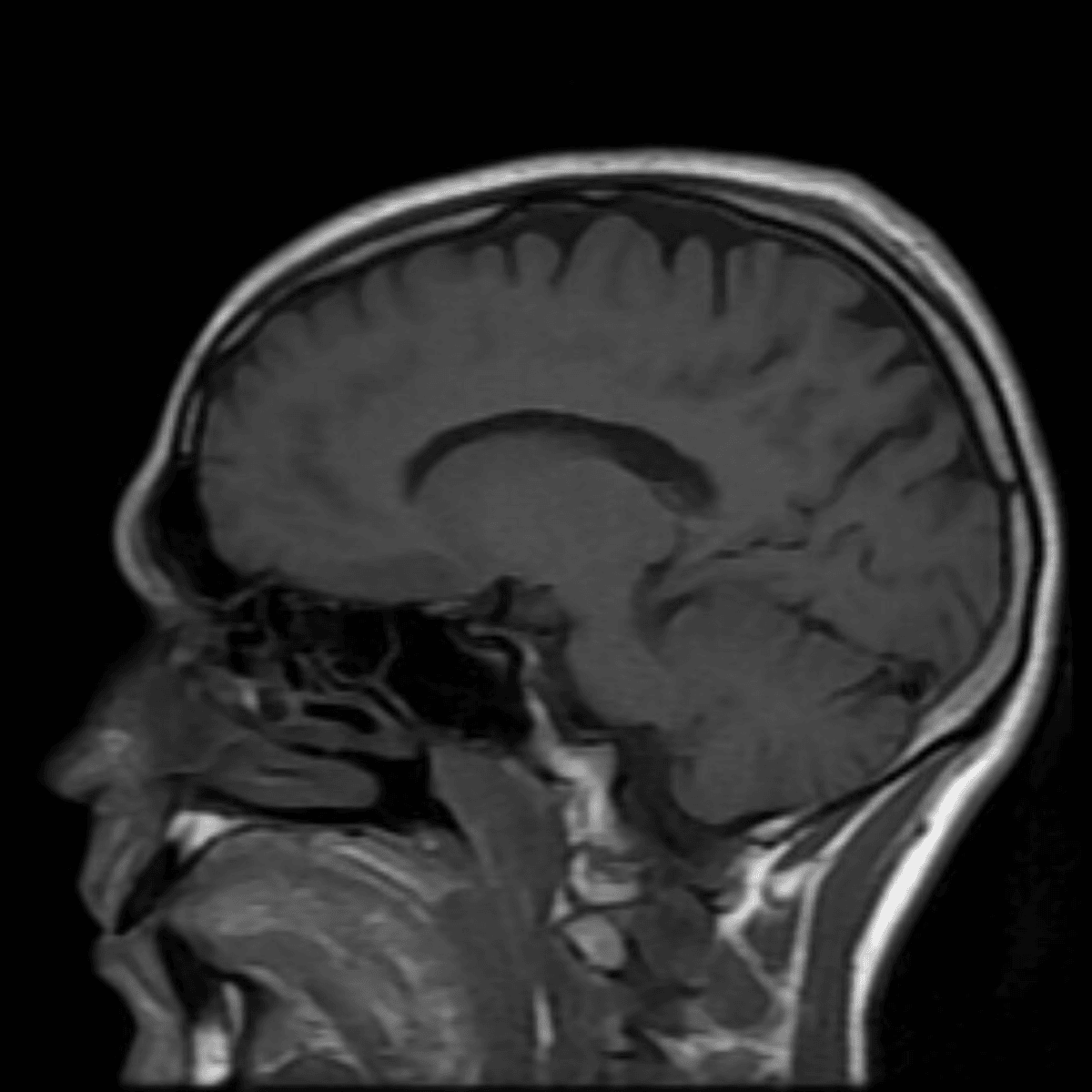
Conditions our MRI scans have found
Spermatic cord lipoma
The spermatic cords are part of the male reproductive system, carrying sperm out of the testicles. Lipomatous thickening of the spermatic cords, also known as spermatic cord lipoma or inguinal canal lipoma, is a benign (non-cancerous), fatty growth and demonstrates a characteristic appearance on MRI.
Subacute fracture
Images show evidence of a previous bone fracture that is healing/has healed.
Spinal canal stenosis
Spinal canal stenosis is when the space where the spinal cord runs through the spine is narrower than normal. This can be congenital (from birth) or from degenerative wear-and-tear. Symptoms can include pain, numbness, tingling or weakness.
Spondylolysis
Spondylolysis is a crack or stress fracture in the vertebrae (spine bone). It is usually caused by repeated stress on the lower back (e.g. weight lifting). Spondylolysis is usually asymptomatic (does not cause symptoms) but when symptoms do occur, low back pain is the most common presentation. The pain may spread across the lower back and/or radiate to the buttocks and to the back of the thighs, and may feel like a muscle strain. The pain is generally worse with vigorous exercise or activity and improves with rest.
Spondylolisthesis
Spondylolisthesis is a general term when the vertebra (spinal bone) is out of position relative to the other vertebrae. Spondylolisthesis occurs most often after age 40 because of degenerative wear-and-tear. Symptoms, if any, usually correlate with the grade of vertebral slippage, and can include localized pain, decreased range of motion, and numbness or tingling. If the slippage is in the lower back the pain may spread across the lower back and/or radiate to the buttocks and to the back of the thighs, and may feel like a muscle strain. It can also cause spasms in the hamstring muscles.
Small vessel ischemia of the brain
Chronica small vessel ischemia is the term used to describe the changes which occur by disrupting the small blood vessels in the brain and is a direct sign of poor cardiovascular health. Mild or patchy small vessel ischemia is a fairly common finding in patients over the age of 60.

Can't find what you're looking for?
Frequently Asked Questions
Unfortunately at this time, we are unable to scan people with pacemakers. There is a risk that the MRI magnetic fields will disrupt its operation, and we don't want that.
There are many different types of implants. We will need to know more about what you have. The good news is that almost all implants are MRI-safe. There is a chance the implant will affect the images we can get from the surrounding tissues.
Yes. Almost all IUDs are MRI-safe. Regardless, we check the MRI safety of all devices. Common MRI-safe IUDs are the Mirena and the Copper T.
Yes you can. There will be extra precautions we will take to ensure your safety while in the machine, so please inform staff before entering the MRI.
Yes. This is completely safe.