Conditions our MRI scans have found
Subendometrial cysts
The endometrium is the inner lining of the uterus. The subendometrium is the region between the endometrium and the outer uterine musculature. Subendometrial cysts are fluid filled sacs that are present in the subendometrial region.
Thickened endometrium
The endometrium is the lining of the uterus. In pre-menopausal women, the endometrial thickness has a wide range because of hormonal fluctuation. In post-menopausal women, the endometrial thickness is typically less than 5 mm. Some causes of thickened endometrium include obesity, hormone replacement therapy, tamoxifen use (medication to treat breast cancer or prevent it for those at high risk), certain conditions such as PCOS or Lynch syndrome and endometrial hyperplasia.
Synovial and ganglion cyst of the pelvis
The synovium is a thin membrane that lines the inner surfaces of joints and produces synovial fluid, which lubricates and protects joints from wear and tear. This fluid can sometimes build up and form a synovial cyst. Synovial cysts are benign (non-cancerous). Although their cause is not fully understood, they are often associated with osteoarthritis. Ganglion cysts are non-cancerous, fluid-filled lumps that can develop around joints and tendons in any part of the body, particularly the hand and wrist. Unlike synovial cysts, ganglion cysts do not have a synovial cell lining. Symptoms, if any, depend on the size and location of the synovial or ganglion cyst, and can include pain, numbness, tingling, weakness or trouble with joint movement.
Syrinx
A syrinx is a cyst (a fluid filled sac) within the spinal cord. The most common cause of syrinx formation is Chiari malformation type I, a developmental variant in which brain tissue protrudes into the spinal canal. Depending on the cyst location and size, a syrinx can be asymptomatic (does not cause symptoms) or cause neurological symptoms (e.g. headaches, pain, numbness, tingling and/or weakness).
Tarlov cyst (Perineural sheath cyst)
Nerves are covered by a sheath lining called the meninges. Sometimes extra cerebral spinal fluid (CSF) collects within the lining, forming what is called a perineural cyst (also known as Tarlov cyst or nerve sheath cyst). It is unclear what causes these cysts to form. Perineural cysts usually do not cause any symptoms. However, sometimes they can expand in size and cause symptoms of pain or numbness when the adjacent nerve is compressed.
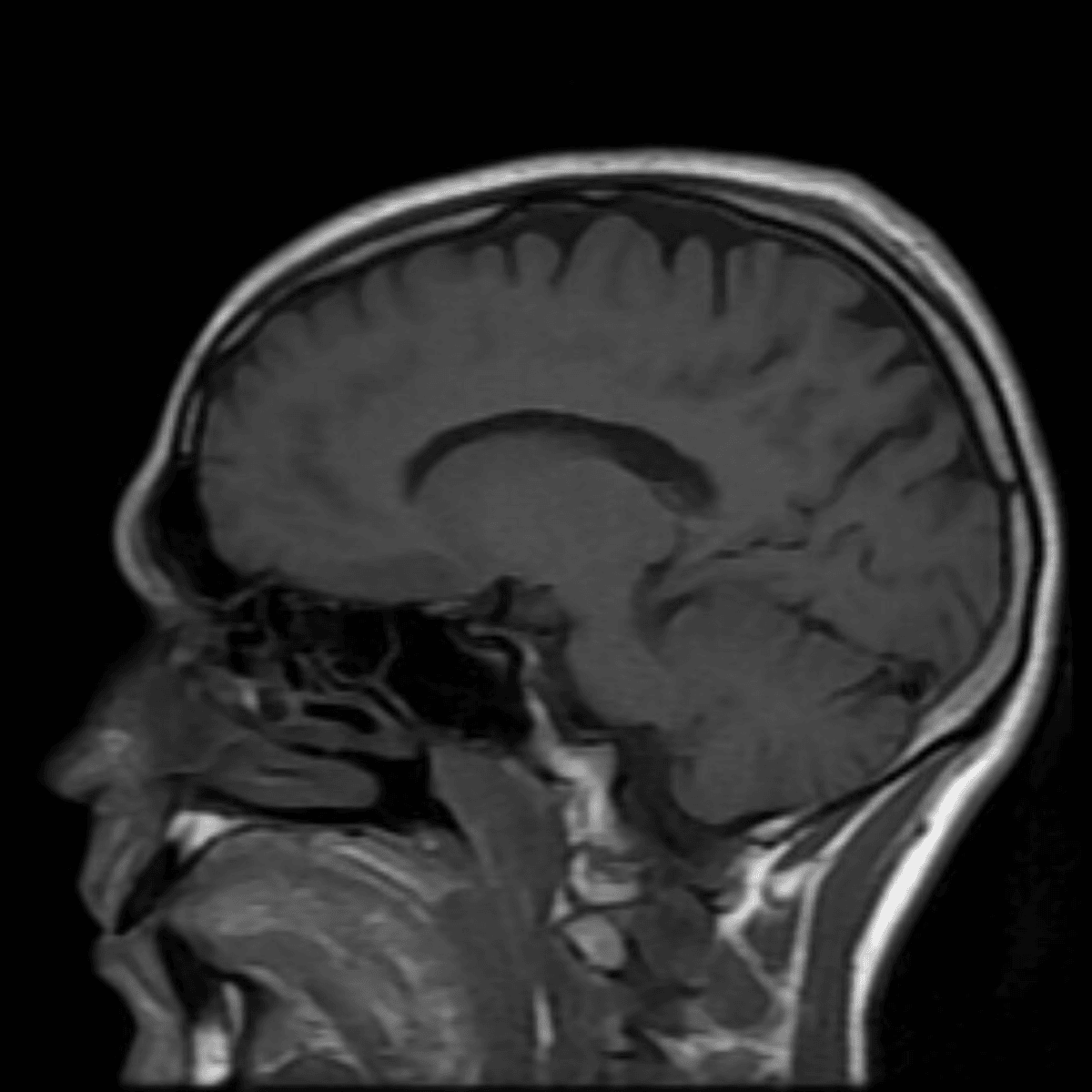
T2 white matter hyperintensities
White matter is the brain tissue that contains nerve fibers and serves as the connection to other parts of the brain. White matter hyperintensities are common changes seen on MRI in asymptomatic individuals (those with no symptoms), and their prevalence increases with age, to nearly 100% in those older than 90 years. The possible causes of white matter hyperintensities include chronic microvascular ischemic changes, vasculitis (blood vessel inflammation), migraine, Lyme disease or demyelinating disease.

Can't find what you're looking for?
Frequently Asked Questions
Unfortunately at this time, we are unable to scan people with pacemakers. There is a risk that the MRI magnetic fields will disrupt its operation, and we don't want that.
There are many different types of implants. We will need to know more about what you have. The good news is that almost all implants are MRI-safe. There is a chance the implant will affect the images we can get from the surrounding tissues.
Yes. Almost all IUDs are MRI-safe. Regardless, we check the MRI safety of all devices. Common MRI-safe IUDs are the Mirena and the Copper T.
Yes you can. There will be extra precautions we will take to ensure your safety while in the machine, so please inform staff before entering the MRI.
Yes. This is completely safe.