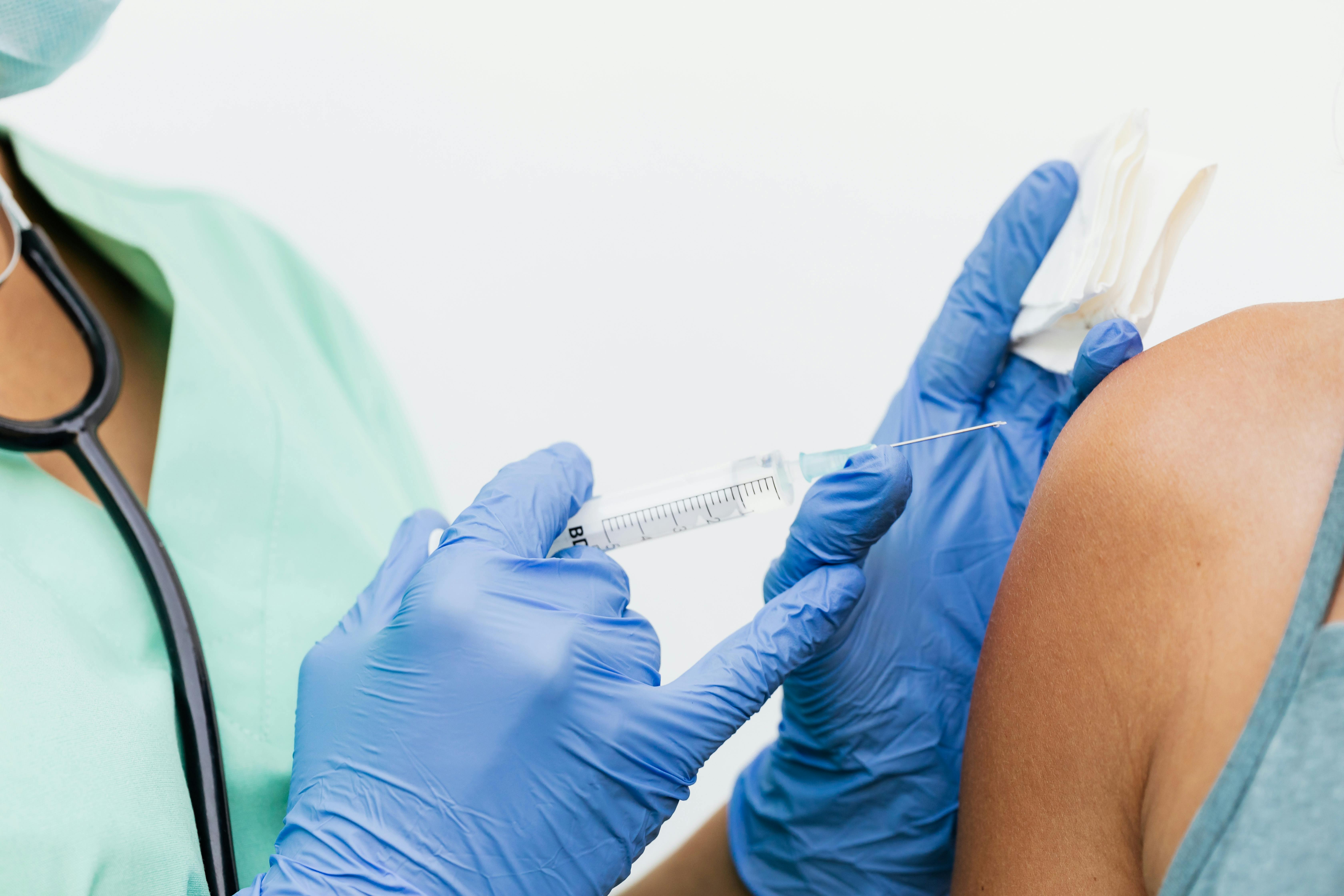
Cervical cancer is one of the most preventable forms of cancer, and now the numbers are showing just how effective prevention can be. Thanks to the NHS HPV vaccination programme, the UK is seeing dramatic drops in cervical cancer rates, particularly among young women. In this article, we’ll explore how the vaccine works, what the latest data shows, and why it’s a powerful tool in safeguarding future generations.
Human Papillomavirus (HPV) is a common virus linked to nearly all cases of cervical cancer. The NHS HPV vaccination programme has drastically reduced rates, especially amongst young women, by offering children aged 12-13 the vaccine at school. As a result, cervical cancer is now one of the most preventable cancers there is, and this article will explore how the HPV vaccine has led the way.
Understanding the Link Between HPV and Cervical Cancer
What is HPV, and how is it transmitted?
HPV is a common virus infecting the skin that lines the inside of the body, like the mouth and genitals. It can affect anyone, regardless of gender, and it is estimated that around 80 per cent of people will have HPV in their lifetime. HPV is passed via skin-to-skin contact, often through sexual activity, and for most people, the body can clear it without you even knowing1–3.
The strains that matter
There are over 100 strains of HPV; most are symptomless and will not affect you in any way. Some strains can cause painless lumps around your mouth, genitals, or anus (warts), but some others may cause precancerous growths4,5.
HPV strains can be described as either high-risk or low-risk. Low-risk HPV strains are thought to either be symptomless, cause mild skin issues, or cause warts to grow. High-risk HPV strains have been linked to the development of cervical or other types of cancer. For example, HPV types 16 and 18 are responsible for around 70 per cent of all cervical cancers4.
How HPV leads to cervical cancer
If HPV is not identified, the virus can change the deoxyribonucleic acid (DNA) inside cells and cause them to behave abnormally. Over time, this may lead to the development of pre-cancerous or cancerous growths4. It takes around 15-20 years for abnormal cells to become cancerous, but in those who have weakened immune systems or who smoke, this can be accelerated to between 5 and 10 years3.
The HPV Vaccine Programme in the UK
The NHS provides an excellent HPV and cervical cancer screening service to women aged 25 to 64. These tests happen every 5 years unless the individual has a positive HPV test, in which case testing occurs every 3 years6.
Who gets the vaccine and when?
- 12-13 year old children7.
- Those under 25 who did not receive the vaccine at school7.
- Those at high risk for HPV, like those with Human Immunodeficiency Virus (HIV)7.
- Men up to age 45 who have sex with men7.
Vaccine coverage and uptake
Across the UK, vaccine uptake in children aged 12-13 in schools has been around 70-75 per cent8,9. This is excellent, but still is below the target set by the World Health Organisation (WHO) of 90 per cent of girls aged 15 and under10. Global coverage of HPV vaccination is thought to be even lower at 30-60 per cent11.
Data shows that uptake of the HPV vaccine is lower in areas that are considered deprived, or within communities made up of people of colour. For example, in Scotland, more deprived areas had a lower rate of HPV vaccine uptake than richer areas12. London statistics suggest that within African, Caribbean, and Indian/Bangladeshi groups, vaccine uptake was lower than that of white children in the same areas13,14.
Increasing accessibility and education are vital to reach underserved communities.
How the vaccine works
In the NHS, Gardasil 9 is used as the primary HPV vaccine15. It is a comprehensive vaccine that offers protection against 9 high-risk HPV strains, including Type 16 and 1816.
Vaccines work by introducing a harmless version of the virus into the system so the body is able to recognise it and better fight against it in the future. This drastically reduces the chance of contracting these strains of HPV. This, in turn, reduces the chance of developing cervical or other types of cancer.
How effective is the vaccine programme?
Since the vaccination programme was introduced across the UK in 2008, reports of cervical cancer have declined significantly, especially in younger women17.
- Pre-vaccine statistics suggest there were 12-13 cases per 100,000 women aged 25-79 in England18.
- 2015-2019 statistics showed that rates decreased to 9.3 people per 100,000, which is around 2,500-2,600 annual cases19.
- By 2040, the NHS aims to reduce this to less than 4 cases per 100,000 people in those aged 25-6419.
The Impact: Cervical Cancer Rates Falling Fast
Why younger vaccination = greater protection
From before the first group of young girls received HPV vaccinations, to the mid-2020s, there was an 84 per cent reduction in cervical cancer rates. This was predicted to save around 687 lives20.
The strongest protection against HPV is before sexual activity begins, as the vaccine prevents viral infection but does not clear existing infection. The immune system is especially responsive to the vaccine in those who have never had any contact with HPV21.
- Children aged 9-14 who received the HPV vaccination were 74-93 per cent protected against HPV infection and pre-cancerous growths.
- Teens aged 15-18 have reduced protection, between 12-90 per cent, potentially due to prior exposure to HPV21.
Are older age groups benefiting too?
Yes, older age groups are benefiting directly from the HPV vaccine programme18,19. If enough of the population is vaccinated to eradicate the virus, those who are not or cannot be vaccinated are less likely to come into contact with HPV. This is called herd immunity.
However, in older women who were not offered the HPV vaccine at school, rates of cervical cancer are particularly high, at around 20-30 cases per 100,000 people aged 55-79 in 201918. In these groups, cervical cancer screening is the most valuable tool for detecting cancer or pre-cancerous changes before they develop.
Vaccine Myths and Concerns Addressed
Myth 1 – “The vaccine encourages early sexual activity”
- There is no evidence to support this claim.
- The NHS concentrates on cancer prevention and regular screening.
Myth 2 – “HPV isn’t serious”
- Though there are low-risk strains of HPV, high-risk strains are responsible for 99.8% of cervical cancer.
- HPV can also cause throat, penile, and other types of gynaecological cancers.
- It is important to vaccinate everyone, regardless of gender.
Myth 3 – “I had the vaccine, so I don’t need screening”
- While the HPV vaccine can dramatically lower the risk of cervical cancer, it doesn’t eliminate the risk.
- With there being little to no early symptoms of cervical cancer, attending the NHS screening service when it is offered is essential, even for vaccinated individuals.
Conclusion
The HPV vaccine prevents infection by high-risk strains of HPV before they can cause cervical cancer. This has reduced rates drastically since the NHS vaccination programme has been active. High uptake will further reduce rates of cervical cancer and will eventually allow for herd immunity, protecting those who cannot have the vaccine.
Cervical cancer is one of the most preventable cancers because regular NHS screening is offered to catch abnormal changes before they become cancerous. When caught at an early stage, the most effective and least invasive treatments can be used, resulting in a higher chance of a good outcome.
The best defence against cancer is early action. Ezra’s MRI can screen for 14 organs and 500+ conditions. Book your Ezra scan today.
Understand your risk for cancer with our 5 minute quiz.
Our scan is designed to detect potential cancer early.
References
1. NHS. What is cervical cancer? nhs.uk. September 18, 2024. Accessed January 13, 2026. https://www.nhs.uk/conditions/cervical-cancer/what-is-cervical-cancer/
2. NHS. Causes of cervical cancer. nhs.uk. September 18, 2024. Accessed January 12, 2026. https://www.nhs.uk/conditions/cervical-cancer/causes/
3. WHO. Cervical cancer. December 2, 2025. Accessed January 12, 2026. https://www.who.int/news-room/fact-sheets/detail/cervical-cancer
4. NHS England. Human papillomavirus (HPV). Cambridge University Hospitals. Accessed January 16, 2026. https://www.cuh.nhs.uk/patient-information/human-papillomavirus-hpv/
5. Cancer Research UK. Does HPV cause cancer? | Cancer Research UK. Accessed January 13, 2026. https://cancerresearchuk.org/about-cancer/causes-of-cancer/infections-eg-hpv-and-cancer/does-hpv-cause-cancer
6. NHS. When you’ll be invited for cervical screening. nhs.uk. July 14, 2023. Accessed January 12, 2026. https://www.nhs.uk/tests-and-treatments/cervical-screening/when-youll-be-invited/
7. NHS. HPV vaccine. nhs.uk. March 6, 2024. Accessed January 16, 2026. https://www.nhs.uk/vaccinations/hpv-vaccine/
8. UK Health Security Agency. Human papillomavirus (HPV) vaccination coverage in adolescents in England: 2023 to 2024. GOV.co.uk. Accessed January 16, 2026. https://www.gov.uk/government/statistics/human-papillomavirus-hpv-vaccine-coverage-estimates-in-england-2023-to-2024/human-papillomavirus-hpv-vaccination-coverage-in-adolescents-in-england-2023-to-2024
9. Public Health Scotland. S1 pupils encouraged to take up the offer of the free HPV vaccine as new report shows uptake remains lower than pre-pandemic levels - News - Public Health Scotland. Accessed January 16, 2026. https://publichealthscotland.scot/news/2025/november/s1-pupils-encouraged-to-take-up-the-offer-of-the-free-hpv-vaccine-as-new-report-shows-uptake-remains-lower-than-pre-pandemic-levels/
10. WHO. Immunization coverage. Accessed January 16, 2026. https://www.who.int/news-room/fact-sheets/detail/immunization-coverage
11. Han J, Zhang L, Chen Y, et al. Global HPV vaccination programs and coverage rates: a systematic review. eClinicalMedicine. 2025;84:103290. doi:10.1016/j.eclinm.2025.103290
12. Henry B. Children in Scotland’s poorest areas least likely to get HPV jab. BBC News. November 25, 2025. Accessed January 16, 2026. https://www.bbc.co.uk/news/articles/cx2dlk8lygxo
13. Marlow L a. V. HPV vaccination among ethnic minorities in the UK: knowledge, acceptability and attitudes. Br J Cancer. 2011;105(4):486-492. doi:10.1038/bjc.2011.272
14. Rockliffe L, Waller J, Marlow LAV, Forster AS. Role of ethnicity in human papillomavirus vaccination uptake: a cross-sectional study of girls from ethnic minority groups attending London schools. Published online February 1, 2017. doi:10.1136/bmjopen-2016-014527
15. UK Health Security Agency. HPV vaccination guidance for healthcare practitioners. GOV.UK. Accessed January 16, 2026. https://www.gov.uk/government/publications/hpv-universal-vaccination-guidance-for-health-professionals/hpv-vaccination-guidance-for-healthcare-practitioners
16. Cancer Research UK. The HPV vaccine | Cancer Research UK. Accessed January 16, 2026. https://cancerresearchuk.org/about-cancer/causes-of-cancer/infections-eg-hpv-and-cancer/the-hpv-vaccine
17. Castanon A, Landy R, Pesola F, Windridge P, Sasieni P. Prediction of cervical cancer incidence in England, UK, up to 2040, under four scenarios: a modelling study. Lancet Public Health. 2017;3(1):e34-e43. doi:10.1016/S2468-2667(17)30222-0
18. Fox L, Bannister P, Memon A. Trends in incidence of cervical cancer in England, 1985-2019. Eur J Public Health. 2022;32(Supplement_3):ckac131.140. doi:10.1093/eurpub/ckac131.140
19. NHS England. NHS England » Cervical cancer elimination by 2040 – plan for England. Accessed January 12, 2026. https://www.england.nhs.uk/long-read/cervical-cancer-elimination-by-2040-plan-for-england/
20. Falcaro M, Soldan K, Ndlela B, Sasieni P. Effect of the HPV vaccination programme on incidence of cervical cancer and grade 3 cervical intraepithelial neoplasia by socioeconomic deprivation in England: population based observational study. Published online May 15, 2024. doi:10.1136/bmj-2023-077341
21. Ellingson MK, Sheikha H, Nyhan K, Oliveira CR, Niccolai LM. Human papillomavirus vaccine effectiveness by age at vaccination: A systematic review. Hum Vaccines Immunother. 19(2):2239085. doi:10.1080/21645515.2023.2239085


