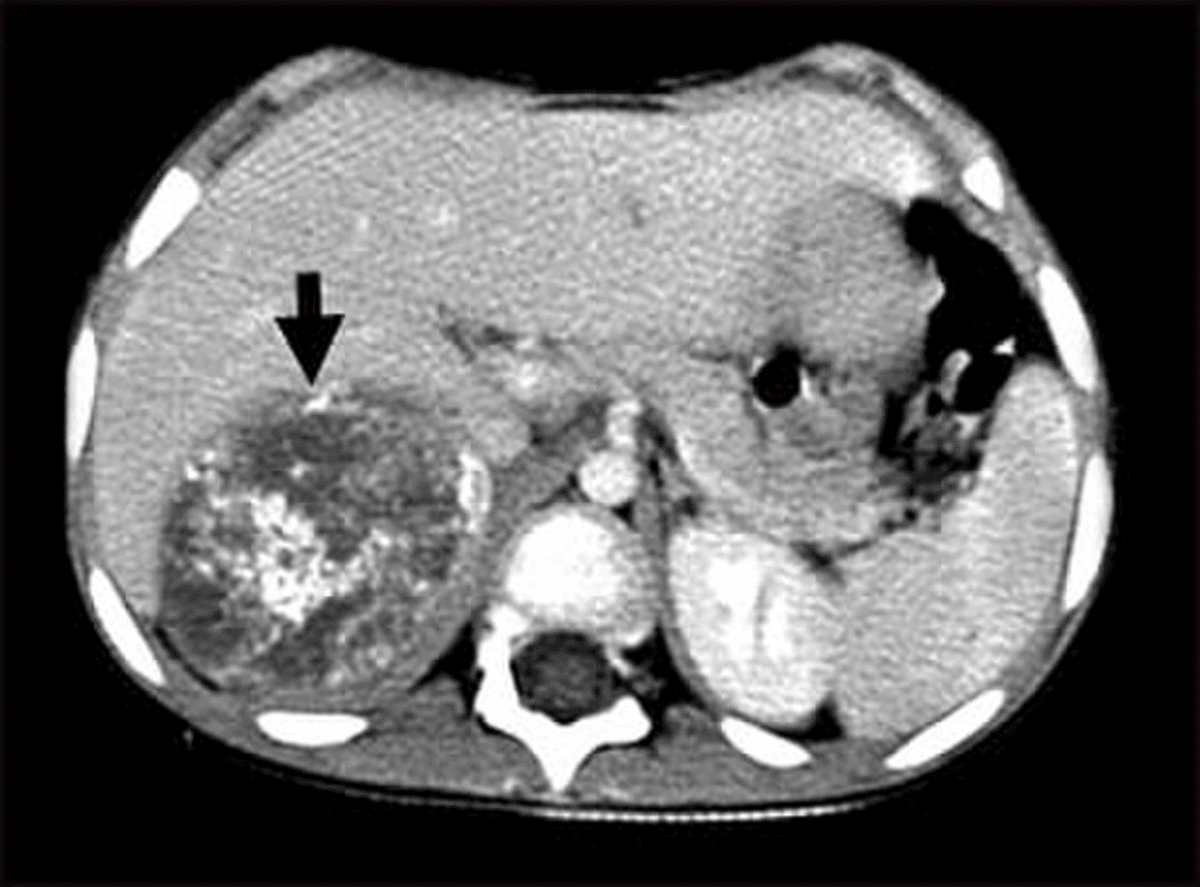
Neuroblastoma is a rare but serious childhood cancer that can be difficult to detect in its early stages. Its symptoms often mimic common childhood illnesses, leading to delayed diagnosis and treatment. This article explores the reasons why neuroblastoma often goes unnoticed, what signs parents and doctors should be aware of, and the role of imaging tools like MRI and CT scans in detecting it earlier.
Key Facts:
- Neuroblastoma accounts for around 6 per cent of all childhood cancers in the UK.
- Approximately 100 children are diagnosed with neuroblastoma each year in the UK.
- 50 per cent of neuroblastomas have already spread by the time they are diagnosed.
- Neuroblastoma diagnosis often uses a combination of imaging tests, including MRI, CT scans, and MIBG scintigraphy.
Neuroblastoma is a cancer that mostly affects babies and children. In the UK, it accounts for 6 per cent of childhood cancer registrations1.
In the early stages, neuroblastoma symptoms can be vague. As a result, it is often diagnosed when tumours have become high-risk2. Early detection is crucial to begin treatments sooner and minimise complications.
What is Neuroblastoma?
Neuroblastoma is a cancer that develops within immature nerve cells. It is diagnosed in around 95 children per year in the UK1.
Tumours can occur anywhere in the body, but most often occur deep in the abdomen or chest. Neuroblastoma may also develop within nerve tissue alongside the spinal cord, neck, or pelvis1.
The International Neuroblastoma Risk Group (INRG) developed a staging system that categorises neuroblastoma based on size and whether the tumour has spread2.
Who is at Risk?
Those who are at risk of developing neuroblastoma are:
- Children under 5 – It is extremely rare for neuroblastoma to develop after the age of 10 years1.
- Boys under 5 – Neuroblastoma is slightly more common in boys than in girls by a ratio of 6:51.
What is Low, Intermediate, and High Risk Neuroblastoma?
In addition to the staging system, cancer is categorised by risk. Neuroblastoma can be categorised as low, intermediate, and high risk3:
- Low-risk: Children have a five-year survival rate higher than 95 per cent
- Intermediate-risk: Children have a five-year survival rate of 90 to 95 per cent
- High-risk: Children have a five-year survival rate of 50 per cent
When Symptoms Appear
Symptoms of neuroblastoma can be vague and overlap with normal childhood illnesses1. Symptoms include:
- Loss of appetite
- Tiredness
- Pain in the bones
- Weakness in the legs
- Bruising and infections
- Small, blue-coloured lumps
Why It Often Goes Undetected
Symptoms of neuroblastoma are non-specific and often do not raise the alarm of a more serious illness. Parents may delay seeking help as they believe symptoms to be a minor issue, GPs may overlook red flags due to the rarity of this form of cancer, and delays in specialist referral could also prolong detection.
As a result, neuroblastoma often progresses without diagnosis. In the UK, 50 per cent of cases are characterised as high-risk upon diagnosis3.
Symptoms Overlap With Common Illnesses
Several symptoms of neuroblastoma are common to other illnesses:
These symptoms are not usually alarming in isolation, but together can indicate a more serious underlying problem.
Impact of Late Diagnosis
Neuroblastoma that has been diagnosed late may have already spread to other areas of the body. This complicates and prolongs treatment.
Tumours at the L1 stage are usually curable by surgery. Tumours in stage L2 can be more difficult to treat with surgery alone, and chemotherapy may be recommended initially. M-stage tumours require intensive chemotherapy. Surgery may be implemented once the tumour has shrunk2.
Late diagnosis does not just impact the treatment route. It also impacts treatment success. Of children who have high-risk neuroblastoma, 50 per cent have tumours that are resistant to standard therapies, or will relapse after treatment3.
How Imaging Can Help Spot Neuroblastoma
A variety of tests can help diagnose neuroblastoma. These include:
- CT scans: These scans use radiation to form a 3D image of the body. CT scans are used to detect the location and size of tumours8.
- MRI scans: MRI scans use radio waves and magnets to form a highly detailed 3D image of the body. MRI scans are ideal for visualising the spread of neuroblastoma through the body, such as to the spine or chest8.
- MIBG scans: These scans use a radioactive tracer to detect and locate tumours. This is useful for assessing the stage of the tumour (i.e., L1, L2, M)9.
Full-body imaging plays a critical role in detecting and assessing high-risk and uncertain cases of neuroblastoma. Imaging allows the stage of the tumours to be categorised, risk to be assessed, and the most suitable therapy options to be implemented.
Summary: Take Proactive Action to Detect Neuroblastoma Earlier
Early detection of neuroblastoma can be challenging. Symptoms are vague and overlap with many other illnesses. However, awareness of the signs and symptoms, and early detection, can help.
Neuroblastoma is often diagnosed when the illness has already progressed to a high-risk stage. However, proactive full-body imaging can help detect tumours before they have spread, and treatment options become more challenging.
Proactive healthcare matters. Ezra offers MRI-based cancer screening that’s fast, non-invasive, and clear.
If you're worried about unexplained symptoms or family history, consider exploring an Ezra MRI scan. The scan covers up to 14 organs and provides early insights across multiple health areas. For peace of mind, book your scan today.
Understand your risk for cancer with our 5 minute quiz.
Our scan is designed to detect potential cancer early.
References
1. Children with Cancer UK. Neuroblastoma | Childhood Cancer. Children with Cancer UK. 2025. Accessed December 16, 2025. https://www.childrenwithcancer.org.uk/cancer-types/neuroblastoma/
2. Neuroblastoma UK. What is neuroblastoma? Neuroblastoma UK. 2025. Accessed December 16, 2025. https://www.neuroblastoma.org.uk/about-neuroblastoma
3. Solving Kids’ Cancer UK. Statistics around neuroblastoma. Solving Kids’ Cancer UK. Accessed December 16, 2025. http://www.solvingkidscancer.org.uk/neuroblastoma/neuroblastoma-statistics/
4. Vincent P, Hazell T. Loss of appetite. Patient. 2023. Accessed December 16, 2025. https://patient.info/healthy-living/healthy-eating/loss-of-appetite
5. Mayo Clinic. Fatigue Causes. Mayo Clinic. 2023. Accessed December 16, 2025. https://www.mayoclinic.org/symptoms/fatigue/basics/definition/sym-20050894
6. UK Health Security Agency. What infections are, how they are transmitted and those at higher risk of infection. GOV.UK. 2025. Accessed December 16, 2025. https://www.gov.uk/government/publications/health-protection-in-schools-and-other-childcare-facilities/what-infections-are-how-they-are-transmitted-and-those-at-higher-risk-of-infection
7. National Institute for Health and Care Excellence (NICE). Bruising: What causes it? National Institute for Health and Care Excellence (NICE). 2021. Accessed December 16, 2025. https://cks.nice.org.uk/topics/bruising/background-information/causes/
8. Cancer Research UK. Tests for neuroblastoma. Cancer Research UK. 2022. Accessed December 16, 2025. https://www.cancerresearchuk.org/about-cancer/childrens-cancer/neuroblastoma/tests
9. NHS. MIBG scan. Great Ormond Street Hospital for Children. 2016. Accessed December 16, 2025. https://www.gosh.nhs.uk/conditions-and-treatments/procedures-and-treatments/mibg-scan/


