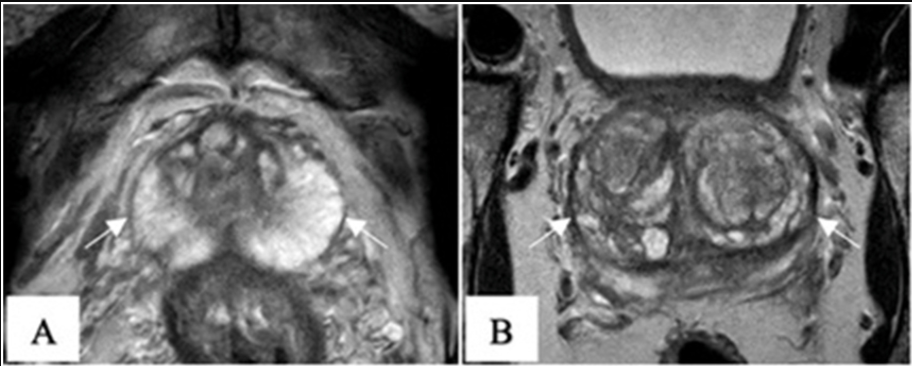
In the UK, prostate cancer is one of the most common cancers in men, but survival rates have improved thanks to earlier detection and advances in treatment. From active surveillance to game-changing drugs like abiraterone, today’s options are more personalised than ever. In this guide, we explain what to expect from diagnosis through to treatment, so you can make informed decisions at every step.
Each year, 55,300 men are diagnosed with prostate cancer in the UK1. Many cases are slow-growing, while others may onset quickly with active treatment required immediately. Because prostate cancer does not usually cause symptoms in the earlier stages2, there is real value in proactive detection, particularly given the range of modern treatment options now available.
How Prostate Cancer Is Diagnosed Today
Common symptoms
In the early stages of prostate cancer, individuals are often symptomless. However, as the cancer grows and spreads, symptoms can occur due to the impact on surrounding organs3. These include:
- Difficulty urinating or straining to urinate
- Weak flow of urine
- Needing to urinate often, urgently, or both
- Urinating during the night
- Blood in urine
- Erectile dysfunction
- Lower back pain
- Losing weight without trying to
Screening and diagnostic tools
Testing for prostate cancer may include an examination of the prostate gland, known as a digital rectal examination, where a doctor checks for abnormal lumps or hard areas.
Prostate cancer screening may also involve a prostate-specific antigen (PSA) blood test. The test assesses the amount of a protein, PSA, made by the body. A higher PSA than is typical for someone of your age can be a sign of prostate cancer. However, there is no single PSA reading that is “normal”. Each reading varies from man to man. So, a high PSA is not a definitive sign of prostate cancer, but does indicate there may be a need for specialist tests4.
If determined as necessary, tests for prostate cancer can include imaging, such as an MRI scan, a PET scan, or a CT scan. They may also include a prostate biopsy, where tissue is taken from the prostate itself and examined for irregularities4.
Ezra’s role in early detection
An MRI scan, like Ezra’s MRI scan, can help doctors check for abnormalities in the prostate gland and check whether local lymph nodes and bones around the pelvis are normal, as prostate cancer can sometimes spread to these areas. It also helps doctors see whether you need a biopsy, and if you do, where it is best to take it from4.
Understanding Your Diagnosis – What the Results Mean
Localised vs advanced prostate cancer
Localised prostate cancer is contained within the prostate, whereas locally advanced or metastatic cancer has spread to surrounding tissues or bones.
Staging and grading
The stage of prostate cancer refers to the size of the cancer and whether it has spread. This is commonly characterised by TNM staging (Tumour, Node, Metastasis)5.
The grade refers to the abnormality of cells and assesses how aggressive the cancer is. This is often scored using the Gleason score6.
Treatment Options for Localised Prostate Cancer
Active surveillance
Localised prostate cancer that is slow-growing and of low risk will likely undergo active surveillance. During this time, the cancer will be regularly monitored with PSA tests, prostate MRIs, and biopsies.
Surgery (prostatectomy)
In higher-risk cases, doctors may recommend removal of the prostate gland, known as a prostatectomy. Like any surgery, this comes with potential side effects that can include urinating without meaning to, erectile dysfunction, and infertility7.
Radiotherapy
There is also the option for radiotherapy8. For this, two options are available:
- External radiotherapy - Targeted radio waves destroy cancer from outside the body. This may occur with or without hormone treatment.
- Internal radiotherapy - A source of radiation is placed inside the body to destroy the cancer from within, also known as brachytherapy.
For those unsure about surgery, or for those unfit for an operation, radiotherapy can be a good treatment option.
Treatment Options for Advanced or Aggressive Prostate Cancer
Hormone therapy (androgen deprivation therapy)
Hormone therapy is one of the most common treatments for metastatic or advanced prostate cancer.
Hormones occur naturally in the body and can control the growth and activity of cells. By reducing hormones like testosterone, prostate cancer can be shrunk, or the growth of the cancer can be slowed.
This is commonly combined with radiotherapy9.
Chemotherapy and immunotherapy
Chemotherapy is another common treatment for metastatic or advanced prostate cancer. In this process, prostate cancer cells are destroyed. Due to the nature of prostate cancer, chemotherapy is not a cure for this disease, but it can improve symptoms and slow progression10.
Abiraterone – expanding access to extend life
For men with advanced prostate cancer, a new-generation hormone therapy known as abiraterone was originally approved for use by the NHS in 2012. As of January 2026, the NHS has increased access to this life-extending drug to those at an earlier stage of prostate cancer (whose cancer has not spread)11.
Research has shown that the survival rate for men at this earlier stage of cancer is improved with access to abiraterone11. As a result of the NHS’s decision to extend access, thousands more men each year will be offered this potentially life-extending treatment.
There are several key facts to understand about this treatment, such as:
- This therapy was found to block testosterone production more completely than the traditional therapies12.
- Abiraterone is typically taken as a daily pill alongside a steroid called prednisolone12.
- Abiraterone has been shown to increase the survival rate in men with metastatic prostate cancer, particularly in cases where traditional hormone therapies were unsuccessful13,14.
Living Well After Treatment
There is plenty of support for those with prostate cancer, even after treatment. Under the government's new National Cancer Plan, every cancer patient will receive a tailored plan covering mental health and employment support15.
Aside from follow-up imaging and PSA monitoring, the NHS and charities like Macmillan Cancer Support can also provide support for side effects affecting physical and sexual health.
Post-treatment, individuals are encouraged to follow a healthy lifestyle, including nutrition and exercise, to support recovery16.
Conclusion: Be Proactive About Your Prostate
Prostate cancer care today includes a wide range of diagnosis and treatment options, from PSA tests, MRI scans, to hormone therapies and surgery.
Every man’s prostate cancer journey is different, but early detection and the appropriate treatment can significantly improve outcomes. Be proactive, stay informed, and speak openly about your health.
If you’re looking to be proactive about your health, the Ezra MRI scan provides a quick, painless, and state-of-the-art solution to keep an eye on your prostate and many other body parts. For ease of mind, book your scan today.
Understand your risk for cancer with our 5 minute quiz.
Our scan is designed to detect potential cancer early.
References
1. Cancer Research UK. What is prostate cancer? Prostate cancer. May 2025. Accessed February 5, 2026. https://www.cancerresearchuk.org/about-cancer/prostate-cancer/about
2. Cancer Research UK. Symptoms of prostate cancer. Prostate cancer. May 2025. Accessed February 5, 2026. https://www.cancerresearchuk.org/about-cancer/prostate-cancer/symptoms
3. NHS UK. Symptoms of prostate cancer. NHS UK. July 3, 2025. Accessed February 5, 2026. https://www.nhs.uk/conditions/prostate-cancer/symptoms/
4. Cancer Research UK. Tests for prostate cancer. Prostate cancer. May 2025. Accessed February 5, 2026. https://www.cancerresearchuk.org/about-cancer/prostate-cancer/getting-diagnosed/tests-for-prostate-cancer
5. Cancer Research UK. TNM staging for prostate cancer. Prostate cancer. May 2025. Accessed February 5, 2026. https://www.cancerresearchuk.org/about-cancer/prostate-cancer/stages/tnm-staging
6. Cancer Research UK. Grade Groups for prostate cancer. Prostate cancer. 2025. Accessed February 5, 2026. https://www.cancerresearchuk.org/about-cancer/prostate-cancer/stages/grades
7. NHS UK. Treatment for prostate cancer. NHS UK. August 8, 2025. Accessed February 5, 2026. https://www.nhs.uk/conditions/prostate-cancer/treatment/
8. Cancer Research UK. Localised prostate cancer. Prostate cancer. 2025. Accessed February 5, 2026. https://www.cancerresearchuk.org/about-cancer/prostate-cancer/stages/localised-prostate-cancer
9. Cancer Research UK. Hormone therapy for metastatic prostate cancer. Prostate cancer. 2025. Accessed February 5, 2026. https://www.cancerresearchuk.org/about-cancer/prostate-cancer/metastatic-cancer/treatment/hormone-therapy-for-metastatic-prostate-cancer
10. Cancer Research UK. Chemotherapy for prostate cancer. Prostate cancer. 2025. Accessed February 5, 2026. https://www.cancerresearchuk.org/about-cancer/prostate-cancer/metastatic-cancer/treatment/chemotherapy
11. England NHS. NHS England » NHS to offer thousands of men life-extending prostate cancer drug. January 16, 2026. Accessed February 9, 2026. https://www.england.nhs.uk/2026/01/nhs-to-offer-thousands-of-men-life-extending-prostate-cancer-drug/
12. Macmillan Cancer Support. Abiraterone acetate (Zytiga®). Treatments and drugs. 2024. Accessed February 5, 2026. https://www.macmillan.org.uk/cancer-information-and-support/treatments-and-drugs/abiraterone
13. de Bono JS, Logothetis CJ, Molina A, et al. Abiraterone and Increased Survival in Metastatic Prostate Cancer. N Engl J Med. 2011;364(21):1995-2005. doi:10.1056/NEJMoa1014618
14. Fizazi K, Tran N, Fein L, et al. Abiraterone acetate plus prednisone in patients with newly diagnosed high-risk metastatic castration-sensitive prostate cancer (LATITUDE): final overall survival analysis of a randomised, double-blind, phase 3 trial. Lancet Oncol. 2019;20(5):686-700. doi:10.1016/S1470-2045(19)30082-8
15. Department of Health and Social Care,. Every cancer patient to get individual support plan. GOV.UK. 2026. Accessed February 6, 2026. https://www.gov.uk/government/news/every-cancer-patient-to-get-individual-support-plan
16. Macmillan Cancer Support. After treatment. Macmillan Cancer Support. 2025. Accessed February 6, 2026. https://www.macmillan.org.uk/cancer-information-and-support/after-treatment
Image adapted from Fig. 1, and used under the Creative Commons license.


