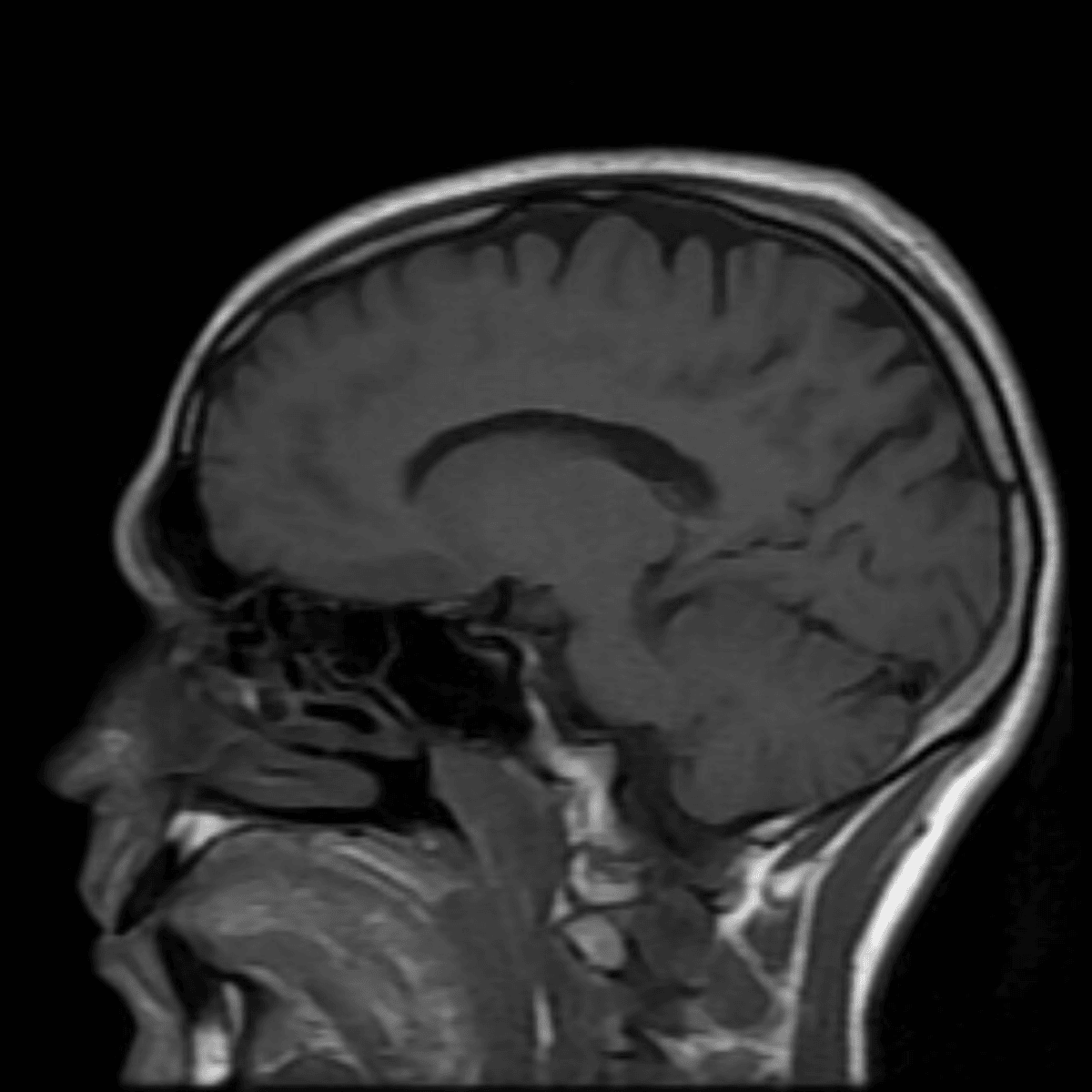
Conditions our MRI scans have found
Hemorrhagic cyst
Cysts are fluid-filled sacs or pockets that can form in various parts of the body. Most cysts present little or no discomfort and are harmless. The majority disappear without treatment within a few months. Sometimes these cysts can rupture and release blood, known as hemorrhagic cysts.
Hemidiaphragm eventration
The diaphragm is a thin, dome-shaped muscular structure that is the primary muscle for respiration (breathing), particularly inspiration (breathing in). Sometimes part of the diaphragm can be thinner and not as muscular - this is called eventration and the cause can be congenital (from birth) or acquired (e.g. weakness from muscular disease or injury to the phrenic nerve [the nerve that provides exclusive motor control of the diaphragm and is essential for breathing]). Most people with diaphragmatic eventration are asymptomatic (do not have symptoms).
Gallbladder distension
The gallbladder is a small, pear-shaped organ on the right side of the abdomen under the liver. The gallbladder holds a digestive fluid called bile that is released into the small intestine to help break down fat and nutrients. Sometimes the gallbladder can look distended (swollen) on imaging. This can happen if there is a blockage (e.g. from gallstones) in the cystic duct, which allows bile to drain from the gallbladder.
Gallbladder polyp
The gallbladder is a small organ located under the liver that stores bile, a substance that helps to break down fats. Sometimes polyps (small growths, usually with a stalk) form along the mucosal surface of the gallbladder; it is unclear what causes this to happen. Gallbladder polyps can cause symptoms similar to gallstones - pain in the right upper abdominal area after eating, especially with fatty meals. Appropriate management and follow-up of gallbladder polyps depends on the size of the polyp.
Gallbladder cyst / Biliary tree cyst
The gallbladder, which is part of the biliary tree, is a small organ located under the liver that stores bile, a substance that helps to break down fats. A cyst is a fluid-filled pocket. It is not known what causes gallbladder cysts to form. These cysts can sometimes cause abdominal pain, jaundice (yellowing of the skin or eyes) and/or an abdominal mass. Biliary tree cysts can be a precancerous finding, so discuss this with your primary care provider and a gastroenterologist or hepatologist (liver specialist) for continued follow-up and surveillance.
Gallbladder wall thickening
The gallbladder is a small, pear-shaped organ on the right side of the abdomen, just beneath the liver. Gallbladder wall thickening is a radiological term that is used to describe abnormal thickening of the gallbladder wall. Thickening of the gallbladder wall is a nonspecific finding (meaning it is difficult to say what caused it). It may occur as the result of various underlying conditions including chronic irritation and inflammation of the gallbladder (i.e. chronic cholecystitis), noncancerous conditions (e.g. hepatitis, pancreatitis, heart failure, renal failure), and gallbladder cancer.

Can't find what you're looking for?
Frequently Asked Questions
Unfortunately at this time, we are unable to scan people with pacemakers. There is a risk that the MRI magnetic fields will disrupt its operation, and we don't want that.
There are many different types of implants. We will need to know more about what you have. The good news is that almost all implants are MRI-safe. There is a chance the implant will affect the images we can get from the surrounding tissues.
Yes. Almost all IUDs are MRI-safe. Regardless, we check the MRI safety of all devices. Common MRI-safe IUDs are the Mirena and the Copper T.
Yes you can. There will be extra precautions we will take to ensure your safety while in the machine, so please inform staff before entering the MRI.
Yes. This is completely safe.