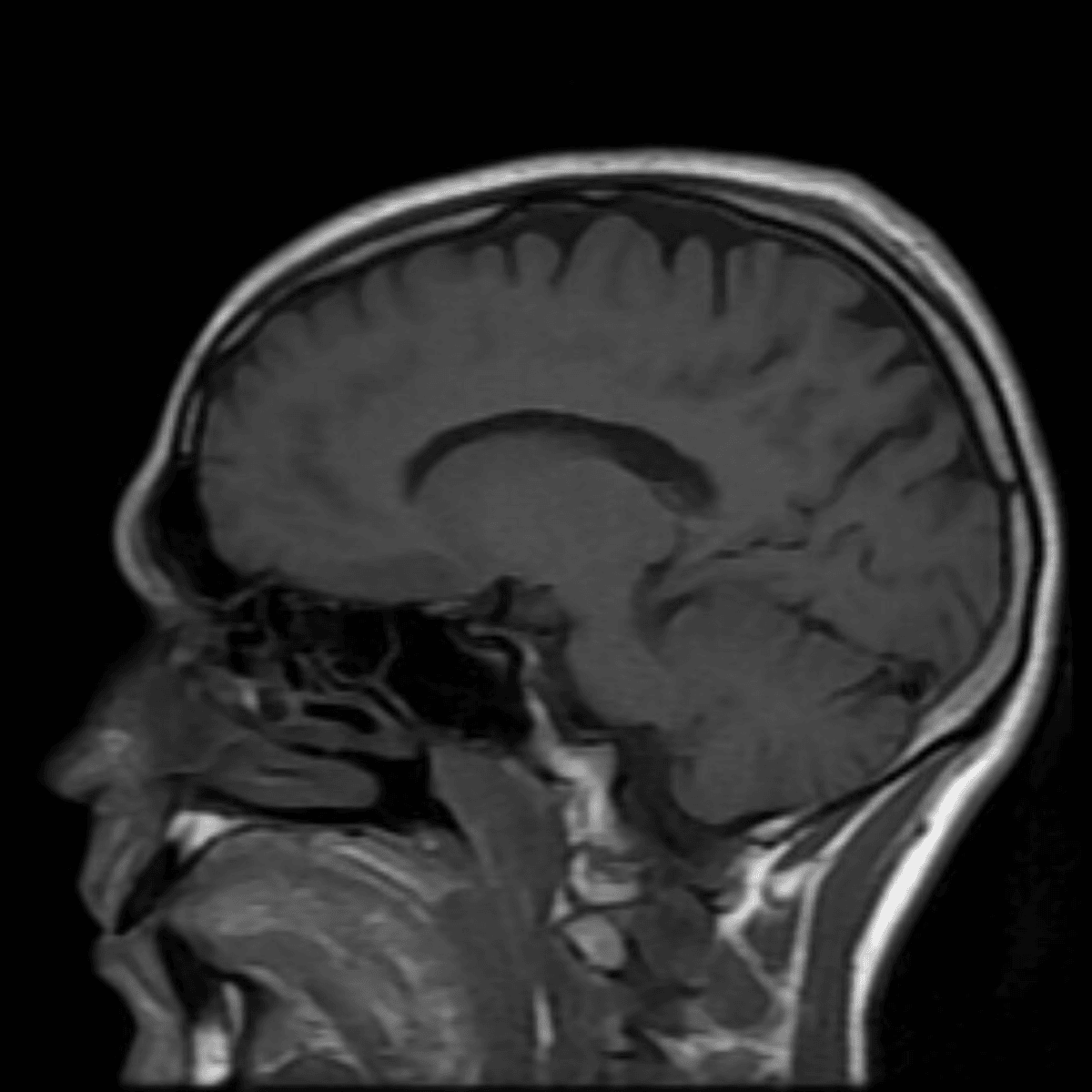
Conditions our MRI scans have found
Heterogeneous low signal throughout the bone marrow
Bone marrow is heterogeneous on MRI images when it does not have the same appearance throughout. Bone marrow is the tissue inside bones that forms the various blood cell types.
Hip joint degenerative changes (partial coverage)
The hip is a ball-and-socket joint. The ball moves in the socket, allowing the leg to rotate and move forward, backward and sideways. As an individual ages, it is common for the cartilage (thin tissue that covers bone surfaces providing smooth, friction-free movement) in the hip joint to wear down. Degenerative hip joint changes can cause symptoms such as pain, stiffness, swelling around the joint, tenderness, limited range of motion, or a sensation of catching or grinding in the joint with movement.
Hip joint replacement
During hip replacement, a surgeon removes the damaged sections of the hip joint and replaces them with parts usually constructed of metal, ceramic and very hard plastic. This artificial joint (prosthesis) helps reduce pain and improve function.
Humeral head enthesophyte
The humeral head is located at the top of the upper arm bone (humerus). It is the ball of the ball-and-socket joint that makes up the shoulder.Enthesophytes are bony proliferations (spurs) that develop at an enthesis (the area of attachment of a ligament, tendon or articular capsule [which provides cushion and protection to the joint whenever the joint moves] with bone). They are oriented along the direction of pull and develop in response to repetitive mechanical stress or a more generalized inflammatory condition.Enthesophytes usually do not cause symptoms, but sometimes large spurs can physically compress nerves and cause stiffness, pain, weakness, tingling or numbness.
Hip impingement
Hip impingement, also known as femoroacetabular impingement (FAI), is a condition in which there is abnormal and wearing contact between the ball and socket of the hip joint. The result is increased friction during hip movements that may damage the joint.
Humeral head cystic degenerative changes (partial coverage)
The humeral head is located at the top of the upper arm bone (humerus). It is the ball of the ball-and-socket joint that makes up the shoulder.Cysts are non-cancerous fluid-filled sacs that can form in joints. Cysts of the humerus are common, and are often associated with rotator cuff tear or aging wear-and-tear (degenerative changes). Risk factors include obesity, smoking tobacco, familial history of osteoarthritis, abnormal joint alignment or unusual joint shape and prior joint injury. Symptoms, if present, can include discomfort, mild to moderate pain and limited joint flexibility.

Can't find what you're looking for?
Frequently Asked Questions
Unfortunately at this time, we are unable to scan people with pacemakers. There is a risk that the MRI magnetic fields will disrupt its operation, and we don't want that.
There are many different types of implants. We will need to know more about what you have. The good news is that almost all implants are MRI-safe. There is a chance the implant will affect the images we can get from the surrounding tissues.
Yes. Almost all IUDs are MRI-safe. Regardless, we check the MRI safety of all devices. Common MRI-safe IUDs are the Mirena and the Copper T.
Yes you can. There will be extra precautions we will take to ensure your safety while in the machine, so please inform staff before entering the MRI.
Yes. This is completely safe.