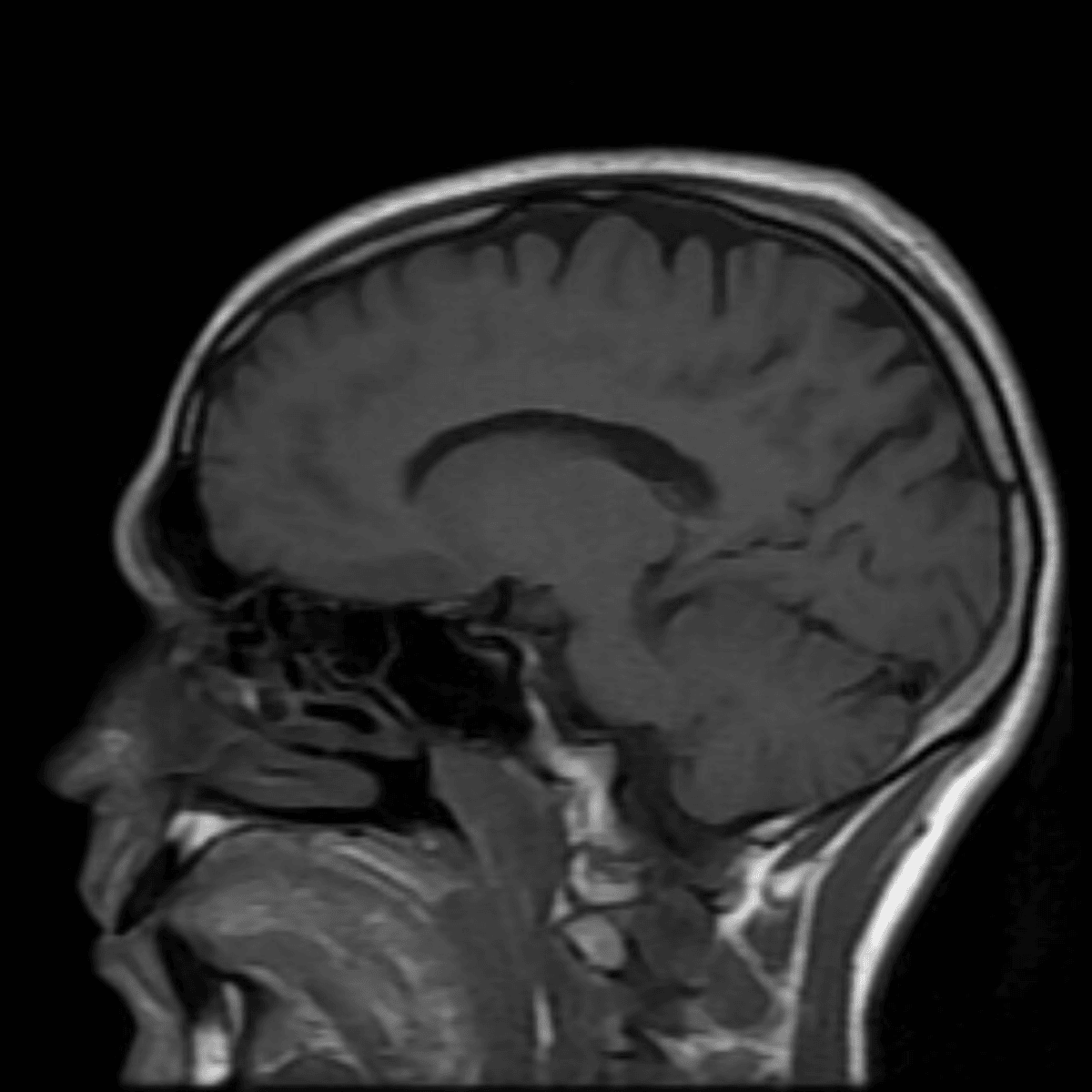
Conditions our MRI scans have found
Pulmonary hamartoma
A hamartoma is a benign (non-cancerous) growth made of an abnormal mixture of normal tissues and cells from the area in which it grows. Pulmonary (lung) hamartomas can cause difficulty breathing, coughing up blood, and trigger pneumonia.
Retention cyst of the oropharynx
The oropharynx is the middle part of the pharynx (throat), behind the mouth. Retention cysts are small soft tissue growths that commonly occur on mucus surfaces in the body. They are usually asymptomatic (do not cause symptoms), but large growths can sometimes cause a sensation of fullness or discomfort.
Retention cyst
Retention cysts are small soft tissue growths that commonly occur on mucus surfaces in the body.
renal papillary necrosis
Kidney (renal) papillae are areas in the kidney where urine flows through. Renal papillary necrosis is a disorder of the kidneys in which all or part of the renal papillae die. This condition can reduce kidney function and can lead to kidney failure.
Renal cortical atrophy
The renal cortex is the outer layer of the kidney. Kidney atrophy means that the kidney is smaller than normal.This can happen for two basic reasons. The first is that part of the kidney does not develop completely from birth (called a congenital problem). This type of kidney atrophy or small kidney usually does not need any special treatment. The second type happens after birth, and can occur in one or both kidneys. This type of kidney atrophy is due to a lower blood supply (i.e. ischemia) to the kidney(s) and/or loss of nephrons, the basic working units of the kidneys.
Retractile testicle
The inguinal canal is a passage in the abdominal wall near the groin. In men it serves as a pathway through which the spermatic cords can pass from the abdominal wall to the external genitalia. There is one inguinal canal in each groin. Some individuals have a retractile testicle, in which the testicle is drawn into the inguinal canal by the cremaster muscle reflex. This reflex is elicited when the inner part of the thigh is touched, causing the cremaster muscle to pull up the testicle into the inguinal canal. If the testicle can be manually moved back into the scrotum and stay in the scrotum on its own, it is not considered a serious health condition. Retractile testicles generally do not need to be treated unless you are having testicular discomfort or infertility issues.

Can't find what you're looking for?
Frequently Asked Questions
Unfortunately at this time, we are unable to scan people with pacemakers. There is a risk that the MRI magnetic fields will disrupt its operation, and we don't want that.
There are many different types of implants. We will need to know more about what you have. The good news is that almost all implants are MRI-safe. There is a chance the implant will affect the images we can get from the surrounding tissues.
Yes. Almost all IUDs are MRI-safe. Regardless, we check the MRI safety of all devices. Common MRI-safe IUDs are the Mirena and the Copper T.
Yes you can. There will be extra precautions we will take to ensure your safety while in the machine, so please inform staff before entering the MRI.
Yes. This is completely safe.