Conditions our MRI scans have found
Ureterocele
A ureterocele is a congenital (present from birth) variation in the ureter (tube that connects the kidney to the bladder) where the ending closest to the bladder has sac-like ballooning.
Urethral diverticulum
A urethral diverticulum is an uncommon condition found mainly in adult women. A urethral diverticulum is when a “pocket” or outpouching occurs along the urethra, a small tube through which urine passes to exit the body. Most urethral diverticula occur in the middle portion and distal urethra (the part of the urethra closest to the outside of the body) and more than one diverticulum may be present. Delayed or missed diagnosis of this condition can lead to chronic problems including stone formation, chronic infections, or malignant (cancerous) transformation.
Vaginal cysts
Vaginal cysts (fluid-filled sacs) occur on or under the lining of the vagina. Most vaginal cysts are benign (non-cancerous), do not cause symptoms and do not require treatment. Cysts that become infected or grow in size may cause a feeling of vaginal pressure, painful sexual intercourse, vaginal discharge, abnormal vaginal bleeding or block the vagina or urethra (the tube that carries urine out of the body from the bladder).
Uterine cyst
A cyst is a sac-like pocket of membranous tissue that contains fluid, air, or other substances. Cysts can grow almost anywhere in the body. There are many different types of cysts. Most cysts are benign (non-cancerous). Whether a cyst needs treatment depends on a number of factors, including the type of cyst, the location, if the cyst is causing pain or discomfort, and whether the cyst is infected.
Vertebral Compression fracture
A vertebral compression deformity (fracture) describes vertical collapse of the spine bone. This is commonly caused by past trauma such as a car accident, sports injury or a hard fall. Symptoms of a subacute compression fracture include back pain, an increase in pain intensity while standing or walking as well as difficulty bending over or sitting.
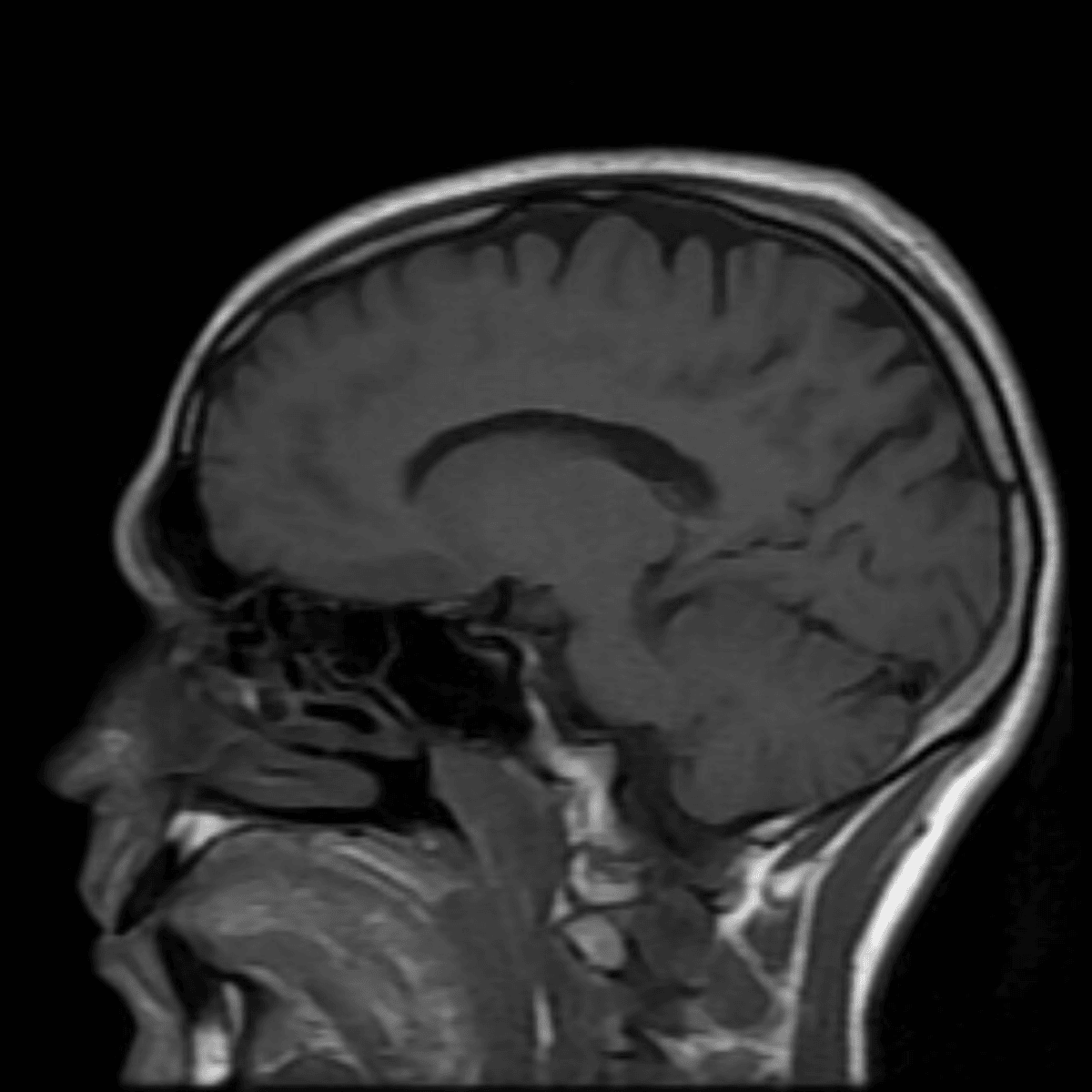
Ventriculomegaly
Ventriculomegaly is a condition in which the ventricles (fluid-filled spaces in the brain) are larger than usual. The brain has 4 ventricles – 2 at the top (on the left and right sides of the brain), one just below these two and one below the third one, near the top of the spine. Usually, the problem is with one or both of the top ventricles.

Can't find what you're looking for?
Frequently Asked Questions
Unfortunately at this time, we are unable to scan people with pacemakers. There is a risk that the MRI magnetic fields will disrupt its operation, and we don't want that.
There are many different types of implants. We will need to know more about what you have. The good news is that almost all implants are MRI-safe. There is a chance the implant will affect the images we can get from the surrounding tissues.
Yes. Almost all IUDs are MRI-safe. Regardless, we check the MRI safety of all devices. Common MRI-safe IUDs are the Mirena and the Copper T.
Yes you can. There will be extra precautions we will take to ensure your safety while in the machine, so please inform staff before entering the MRI.
Yes. This is completely safe.