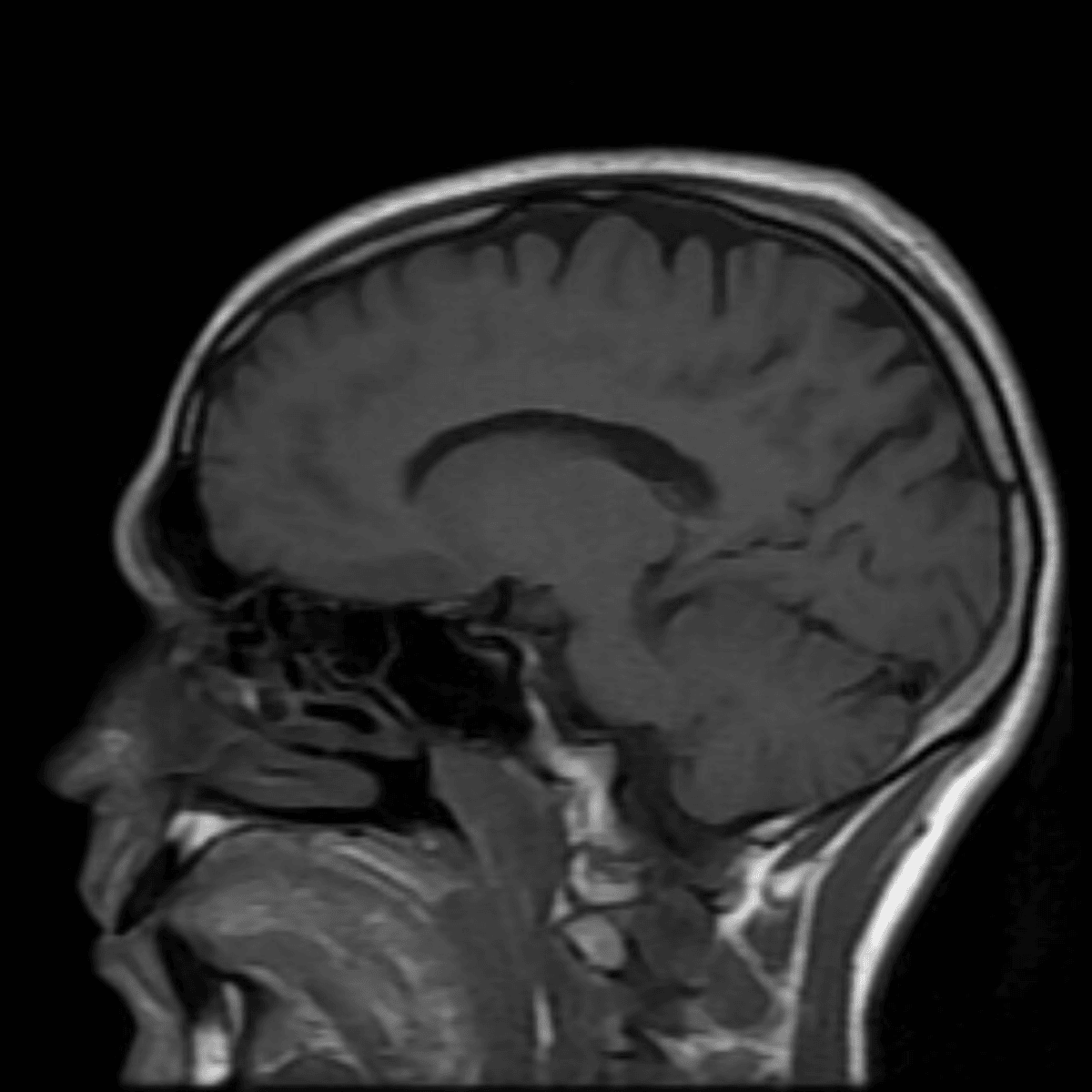
Conditions our MRI scans have found
Vasogenic edema
Vasogenic edema is a buildup of fluid in the brain due to a disruption in the blood brain barrier (BBB). The BBB is a network of blood vessels and tissue that helps keep harmful substances from reaching the brain.
Vocal cord paralysis
Vocal cord paralysis occurs when the nerve impulses to the voice box (larynx) are disrupted. This results in paralysis of the vocal cord muscles. In most cases of vocal cord paralysis, only one vocal cord is paralyzed. Vocal cord paralysis can affect the ability to speak and even breathe. Vocal cords not only produce sound, but they also protect the airway by preventing food, drink and even saliva from entering the windpipe (trachea) which could cause choking. When vocal cord paralysis has been diagnosed, a cause should be actively sought. Possible causes include nerve damage during surgery, viral infections and certain cancers.
Von Meyenburg complexes
The liver contains bile ducts which carry bile, a fluid that helps the digestion of fats, into the intestines. Liver hamartomas are dilated cystic bile ducts. When there are multiple biliary hamartomas present it is known as Von Meyenburg complexes. Von Meyenburg complexes are usually asymptomatic (do not cause symptoms) and benign (non-cancerous).
Xanthogranulomas
Xanthogranulomas of the choroid plexus are common benign (non-cancerous) lesions. It is unclear whether they represent a distinct entity from adult choroid plexus cysts, but they share imaging characteristics. As the clinical history is the same, the distinction is largely irrelevant.
White matter disease
White matter disease is an umbrella term for damage to your brain's white matter caused by reduced blood flow to the tissue. It can cause issues with memory, balance and mobility. People who have risk factors for cardiovascular disease also have a greater risk of developing white matter disease.
Zenker's diverticulum
A Zenker's diverticulum is an outpouching that occurs at the junction of the lower part of the throat and the upper portion of the esophagus. It develops when the muscle between the throat and esophagus, over-tightens, causing the throat above it to pouch out. Over time, the pouch can enlarge as the muscles below it tighten excessively. Food can catch in this pouch or it can cause an obstruction. Symptoms, if present, may include regurgitation of undigested food, difficulty swallowing and coughing while eating.

Can't find what you're looking for?
Frequently Asked Questions
Unfortunately at this time, we are unable to scan people with pacemakers. There is a risk that the MRI magnetic fields will disrupt its operation, and we don't want that.
There are many different types of implants. We will need to know more about what you have. The good news is that almost all implants are MRI-safe. There is a chance the implant will affect the images we can get from the surrounding tissues.
Yes. Almost all IUDs are MRI-safe. Regardless, we check the MRI safety of all devices. Common MRI-safe IUDs are the Mirena and the Copper T.
Yes you can. There will be extra precautions we will take to ensure your safety while in the machine, so please inform staff before entering the MRI.
Yes. This is completely safe.