

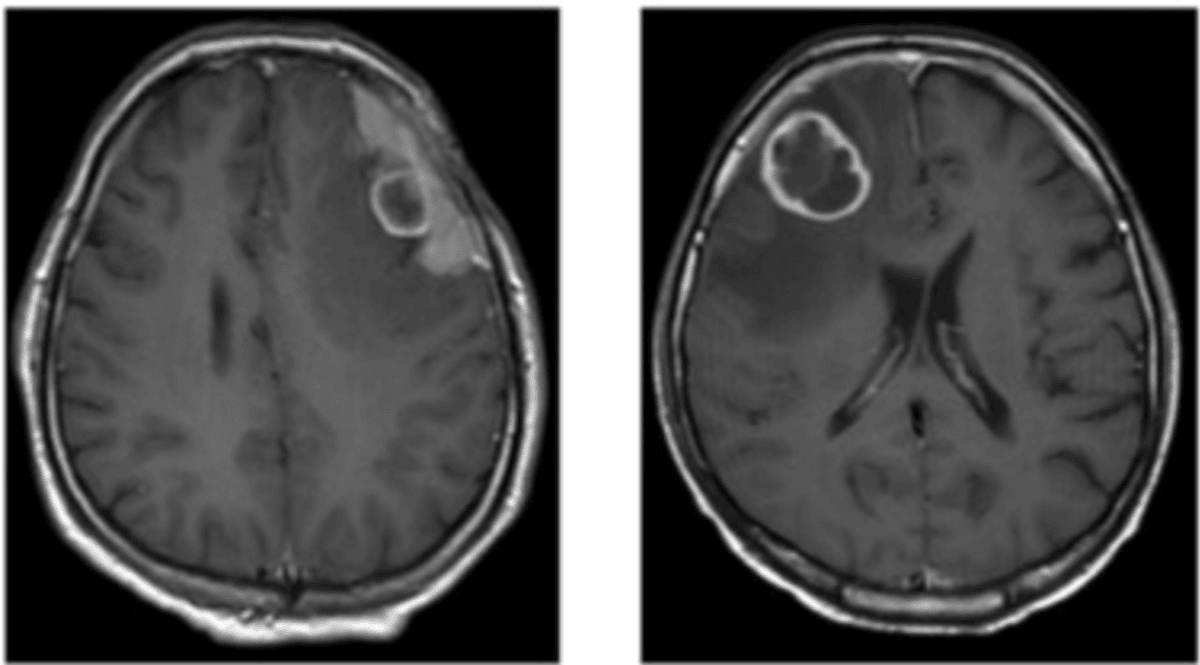
March is Brain Tumour Awareness Month, a time to spotlight a condition that affects thousands of people across the UK each year. While brain tumours are less common than many other cancers, their impact can be profound. Recognising the key facts, understanding early symptoms, and knowing when to seek medical advice can make a significant difference.
Raising awareness and destigmatising conversations about brain health are key steps towards early detection. This article explores what brain tumours are, the symptoms to watch out for, how they’re diagnosed, and why ongoing awareness is vital in improving outcomes across the UK.
What Is a Brain Tumour?
A brain tumour is a collection of abnormal cells growing within or around the brain. Tumours that originate in the brain are known as primary tumours, while those that spread from other parts of the body are known as secondary or metastatic tumours. These growths can be benign (non-cancerous) or malignant (cancerous)1. Although not all malignant tumours are terminal, even benign tumours can be dangerous as they occupy limited space within the skull. This increases pressure on the surrounding brain tissue and may lead to symptoms2.
Brain Tumour Statistics in the UK
Cancer of the brain and spinal cord accounts for around 3 per cent of all UK cancer diagnoses each year. This corresponds to approximately 6800 women and 6200 men diagnosed annually with brain or CNS cancer. Around 50 per cent will survive one year after diagnosis, 25 per cent will survive 5 years, and 20 per cent will survive 10 years3.
Compared to other cancers, these rates are low, making brain cancer one of the less survivable cancers4. Brain tumours can affect anyone regardless of age, sex, or race. Symptoms, treatment options, and survival all vary depending on tumour size and location5.
Early Symptoms of a Brain Tumour
Symptoms differ depending on where in the brain the tumour is and how large it becomes. The skull is a fixed, enclosed space, so a tumour will press on the surrounding brain tissue and cause problems, regardless of whether the tumour is malignant or not6.
Many common brain tumour symptoms overlap with common conditions, so most people experiencing them won’t have a brain tumour. However, if new, persistent, or unexplained symptoms don’t resolve, speak to your GP promptly for advice.
Persistent or Worsening Headaches
Headaches are extremely common and usually caused by tension, dehydration, or lack of sleep. For most people, they’re nothing serious, and rarely the only symptom of a brain tumour7. But a headache caused by pressure in the brain feels different from your normal pattern8.
It may1,5,7:
- Come on suddenly or feel unusually strong
- Happen more often, especially first thing in the morning or when changing position
- Be accompanied by nausea or vomiting without another clear cause
- Feel different in location or type from your usual headaches
Occasional headaches are rarely a red flag. What matters most is whether you’ve noticed a change in frequency, intensity, or pattern over time9.
Seizures
A seizure happens when electrical activity in the brain becomes temporarily disordered, causing uncontrolled movements or loss of awareness. Some people describe it as “blanking out,” while others experience twitching or jerking of the limbs10.
Less obvious seizure symptoms can include11:
- Unexplained sweating or palpitations
- A sudden feeling of fear or déjà vu
- Numbness, tingling, or odd smells or tastes
If you experience a seizure for the first time, go to A&E immediately. It doesn’t necessarily mean you have a brain tumour, but it always needs urgent assessment2,6.
Changes in Vision, Speech, or Hearing
Depending on which area of the brain is affected, people may notice11:
- Blurred or double vision, or temporary loss of vision
- Slurred or hesitant speech
- Hearing changes, such as muffled sounds or ringing in one ear
Sometimes these changes occur gradually, making them easy to overlook11. If they happen repeatedly or worsen, book an eye test or GP appointment.
Weakness or Numbness
A tumour pressing on motor or sensory areas of the brain can lead to weakness, clumsiness, or loss of sensation, often on one side of the body.
You might notice11:
- Difficulty holding objects or tripping more often
- Feeling like one side of your face or body is “heavier” or less responsive
These symptoms should always be checked promptly, particularly if they appear suddenly.
Cognitive or Personality Changes
Because the brain controls mood, memory, and behaviour, a tumour may affect how a person thinks or acts.
Common early signs include12,13:
- Short-term memory problems, poor concentration, or confusion
- Mood swings, irritability, or loss of interest in usual activities
Subtle changes may be noticed more by family or friends. These changes can be unsettling, but they may have multiple causes, so a medical assessment is the best next step.
When Should You See a GP?
Some of these symptoms, in isolation, such as a headache or subtle age-related vision changes, may not be cause for concern14. However, if symptoms like seizures or slurred speech appear suddenly without explanation, or if multiple symptoms occur together, contact your GP or go to A&E immediately.
This could include11:
- Persistent, worsening headaches
- A first seizure
- Ongoing unexplained cognitive changes
What Causes Brain Tumours?
There is no exact known cause for brain tumours. There are several risk factors, including15,16:
- Age: most brain tumours occur in 85-89-year-olds
- Obesity: being overweight may increase the risk of certain tumours and accounts for ~2% of cases
- Radiation: exposure accounts for very few cases, mainly in those who have had extensive radiotherapy
- Family history and genetics: conditions including tuberous sclerosis, neurofibromatosis type 1, neurofibromatosis type 2, and Turner syndrome increase the risk
Can Brain Tumours Be Prevented?
Most brain tumours are not linked to lifestyle factors. Unlike lung or cervical cancer, they have few modifiable risk factors15. Maintaining good general health remains important as it can improve outcomes if diagnosed16.
Awareness and early detection are our most powerful tools. You know your body best, so if you notice even subtle changes, contact your GP for advice and peace of mind.
How Are Brain Tumours Diagnosed?
Initial Investigations
At your GP, they will try to identify a cause for your symptoms. This initial exam may include17:
- Reflex tests: checking pupil response to light, knee-jerk reaction
- Memory and cognitive tests
- Hearing, balance, and sensation checks
If needed, your GP will refer you to a hospital, where further investigation can be carried out.
Follow-up Appointments
Imaging techniques17–19
- Magnetic Resonance Imaging (MRI) with contrast: most common technique, providing highly detailed 3D images of the brain (30–60 minutes). The contrast dye highlights blood vessels, tumour boundaries, and abnormal tissue.
- Computed Tomography (CT) with contrast: quick initial scan (5–10 minutes) to locate the tumour and detect bleeding, calcification, or swelling.
- Positron Emission Tomography (PET)-CT scan: shows how active the tumour cells are and helps distinguish active cancer from dead tissue or inflammation.
- Brain angiogram: X-ray imaging that maps blood vessels around the tumour, essential for planning any surgery.
Other hospital examinations may include17,18:
- Lumbar puncture: a needle extracts cerebrospinal fluid from the lower back to check for cancer cells or infection (20–30 minutes).
- Genetic screening: analyses tumour DNA for mutations to guide targeted therapies.
- Biopsy: a small tissue sample is surgically removed (via needle or open procedure) and examined under a microscope for definitive diagnosis and tumour grading.
Why Brain Tumour Awareness Month Matters
With no proven prevention methods, there is still a lot to learn about brain tumours. Early detection and awareness are our strongest tools. Brain Tumour Awareness Month promotes public education and reduces stigma around neurological symptoms. By encouraging earlier medical assessment, treatment options can be expanded while boosting patient advocacy and research funding.
Conclusion
Brain tumours are rare but devastating. The majority of concerning symptoms have other causes, but the early assessment of brain tumour-related symptoms can be life-changing. This March, commit to listening to your body. Contact your GP about persistent changes. Awareness saves lives.
If you want to learn more about MRI imaging, Ezra offers multi-organ MRIs, including the brain. Expert radiologists carry out their quick and painless scans, allowing screening for early warning signs of multiple cancers and over 500 non-cancerous conditions. Book your appointment today.
Understand your risk for cancer with our 5 minute quiz.
Our scan is designed to detect potential cancer early.
References
1. Cancer Research UK. Brain tumours. Accessed March 11, 2026. https://www.cancerresearchuk.org/about-cancer/brain-tumours
2. NHS. Non-cancerous (benign) brain tumours. nhs.uk. March 4, 2025. Accessed March 11, 2026. https://www.nhs.uk/conditions/non-cancerous-benign-brain-tumours/
3. Cancer Research UK. Survival for brain tumours. Accessed March 10, 2026. https://www.cancerresearchuk.org/about-cancer/brain-tumours/survival
4. The Less Survivable Cancers. The Less Survivable Cancers. Less Survivable Cancers Taskforce. Accessed March 11, 2026. https://lesssurvivablecancers.org.uk/the-less-survivable-cancers/
5. NHS. Brain tumours. nhs.uk. October 17, 2017. Accessed January 21, 2026. https://www.nhs.uk/conditions/brain-tumours/
6. NHS. Symptoms of a malignant brain tumour (brain cancer). nhs.uk. April 17, 2025. Accessed March 11, 2026. https://www.nhs.uk/conditions/malignant-brain-tumour/symptoms/
7. Macmillan Cancer Support. Brain tumour symptoms. Accessed March 11, 2026. https://www.macmillan.org.uk/cancer-information-and-support/brain-tumour/signs-and-symptoms-of-a-brain-tumour
8. NHS. Intracranial hypertension. nhs.uk. October 18, 2017. Accessed March 11, 2026. https://www.nhs.uk/conditions/intracranial-hypertension/
9. García-Azorín D, Perez-de-la-Parte A, Tana C, et al. Hallmarks of headache disorders: part 5 - secondary headaches. J Headache Pain. 2026;27(1):62. doi:10.1186/s10194-026-02301-6
10. Peach R. What are a brain tumour’s early symptoms? The Brain Tumour Charity. February 14, 2025. Accessed March 11, 2026. https://www.thebraintumourcharity.org/news/support-news/brain-tumour-early-symptoms/
11. Cancer Research UK. Brain tumour symptoms. Accessed March 11, 2026. https://www.cancerresearchuk.org/about-cancer/brain-tumours/symptoms
12. The Brain Tumour Charity. Personality changes and brain tumours. The Brain Tumour Charity. Accessed March 11, 2026. https://www.thebraintumourcharity.org/living-with-a-brain-tumour/side-effects/personality-changes/
13. Mekler S, Virtue-Griffiths S, Pike K. Self- and informant-reported cognitive concerns associated with primary brain tumour: systematic review. Support Care Cancer. 2025;33(4):310. doi:10.1007/s00520-025-09345-5
14. NHS. Age-related macular degeneration (AMD) - Getting diagnosed. nhs.uk. October 23, 2017. Accessed March 11, 2026. https://www.nhs.uk/conditions/age-related-macular-degeneration-amd/getting-diagnosed/
15. Ostrom QT, Fahmideh MA, Cote DJ, et al. Risk factors for childhood and adult primary brain tumors. Neuro-Oncol. 2019;21(11):1357-1375. doi:10.1093/neuonc/noz123
16. Cancer Research UK. Risks and causes of brain tumours. Accessed March 11, 2026. https://www.cancerresearchuk.org/about-cancer/brain-tumours/risks-causes
17. Cancer Research UK. Tests to diagnose brain tumours. Accessed March 11, 2026. https://www.cancerresearchuk.org/about-cancer/brain-tumours/getting-diagnosed/what-are-the-tests
18. NHS. Tests and next steps for a malignant brain tumour (brain cancer). nhs.uk. April 17, 2025. Accessed March 11, 2026. https://www.nhs.uk/conditions/malignant-brain-tumour/tests-and-next-steps/
19. The Brain Tumour Charity. How brain tumours are diagnosed. The Brain Tumour Charity. Accessed March 11, 2026. https://www.thebraintumourcharity.org/brain-tumour-diagnosis-treatment/how-brain-tumours-are-diagnosed/
Image adapted from Figure 3, and used under the Creative Commons license.


