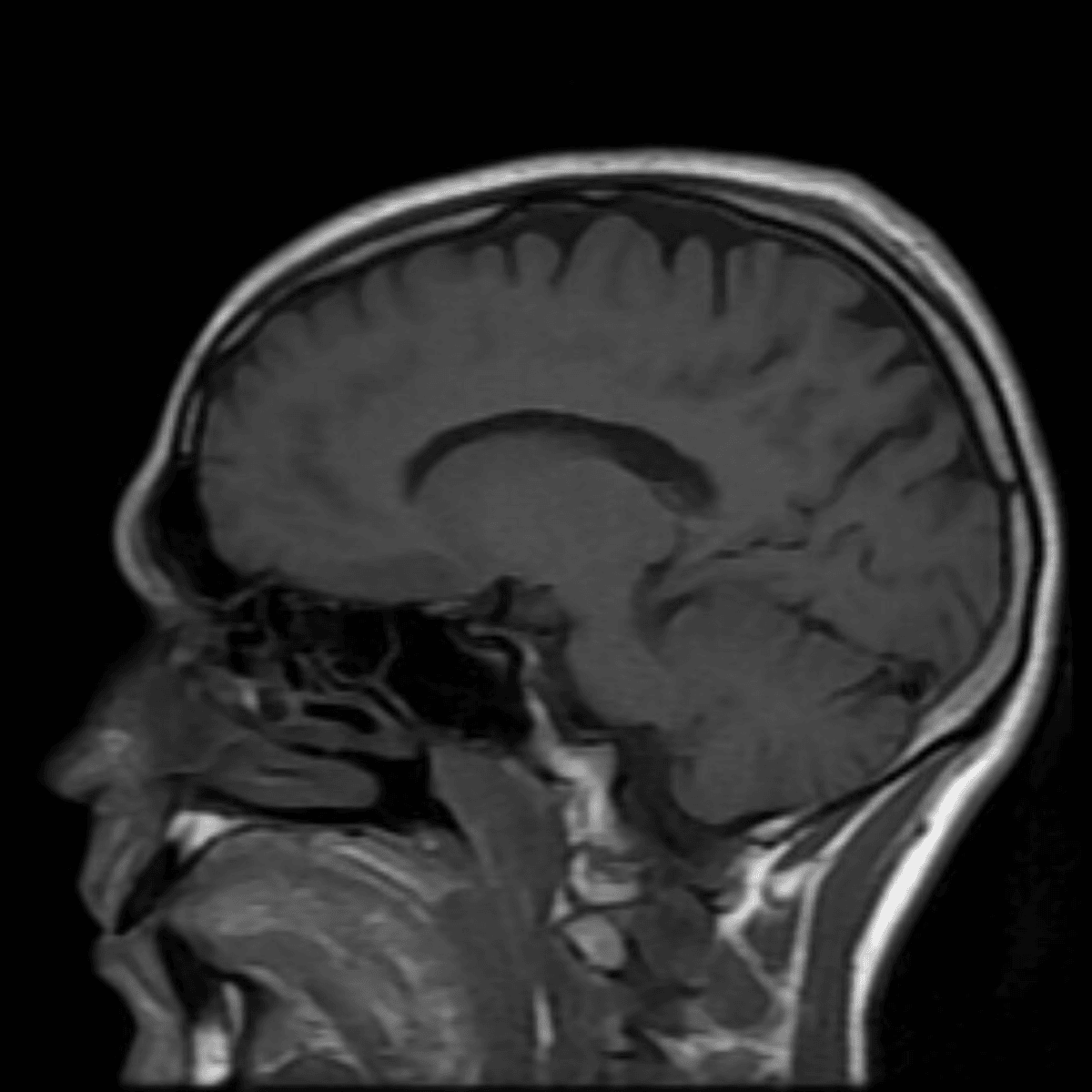
Conditions our MRI scans have found
Cerebellar tonsillar ectopia/Chiari malformation
The cerebellum is the part of the brain that coordinates voluntary movements such as posture, balance, coordination, and speech, resulting in smooth and balanced muscular activity. Cerebellar tonsillar ectopia is when the cerebellar tonsils (bottom part of the cerebellum) extend into the spinal canal.
Cerebellopontine angle lesion
The cerebellopontine angle is a triangular space filled with cerebrospinal fluid (CSF). It is located in the posterior cranial fossa (the most posterior aspect of the skull base housing the brainstem and cerebellum). Cerebellopontine angle (CPA) tumors are the most common neoplasms (abnormal growths) in the posterior fossa, accounting for 5-10% of intracranial tumors. Most CPA tumors are benign (non-cancerous), slow-growing tumors, with over 85% being vestibular schwannomas (acoustic neuromas), lipomas, vascular malformations, and hemangiomas. Symptoms may include headache, ringing in the ears, dizziness, hearing or visual changes and sensation changes in the face. Cerebellopontine angle tumors can cause nerve damage or compress the brain stem if not treated.
Cavernoma
A cavernoma, also known as a cavernous malformation, is a mass in the brain or spinal cord made up of abnormal dilated blood vessels. Cavernomas account for a large proportion (8-15%) of all brain and spinal vascular malformations. They are dynamic structures, changing in size and number over time. About a third of individuals with cavernomas develop symptoms, often between ages 20 - 40, which can include severe headache that is different from past headaches, nausea and vomiting, sensitivity to light, fainting, stroke-like symptoms, loss of consciousness and/or seizures.
Cerebellar atrophic change
The cerebellum is the area at the back and bottom of the brain, behind the brainstem (where the spinal cord meets the brain). It receives information from the sensory systems, the spinal cord, and other parts of the brain and then regulates motor movements. The cerebellum coordinates voluntary movements such as posture, balance, coordination, and speech, resulting in smooth and balanced muscular activity. It is also important for learning motor behaviors and coordination of eye movements. Diffuse atrophy of the cerebellum refers to a progressive and irreversible reduction in cerebellar volume. It is found in a wide variety of clinical scenarios. It can also result from a variety of causes including drugs (alcohol and/or certain medications) and neurodegenerative diseases.
choroid plexus cysts
The choroid plexus is a secretory tissue found in each of the brain ventricles (a communicating network of cavities filled with cerebrospinal fluid [CSF] and located within the brain tissue), the main function of which is to produce CSF. Cysts of the choroid plexus are common, benign (non-cancerous) lesions. In almost all cases these cysts are asymptomatic (do not cause symptoms), but sometimes can cause headaches, neurologic deficits, or seizures.
cutaneous vascular malformation
Vascular malformation is a general term to describe when blood vessels and/or lymph vessels have an abnormal appearance or connection because of developmental variation. This finding is located within your skin and is a rare but benign (non-cancerous) finding.

Can't find what you're looking for?
Frequently Asked Questions
Unfortunately at this time, we are unable to scan people with pacemakers. There is a risk that the MRI magnetic fields will disrupt its operation, and we don't want that.
There are many different types of implants. We will need to know more about what you have. The good news is that almost all implants are MRI-safe. There is a chance the implant will affect the images we can get from the surrounding tissues.
Yes. Almost all IUDs are MRI-safe. Regardless, we check the MRI safety of all devices. Common MRI-safe IUDs are the Mirena and the Copper T.
Yes you can. There will be extra precautions we will take to ensure your safety while in the machine, so please inform staff before entering the MRI.
Yes. This is completely safe.