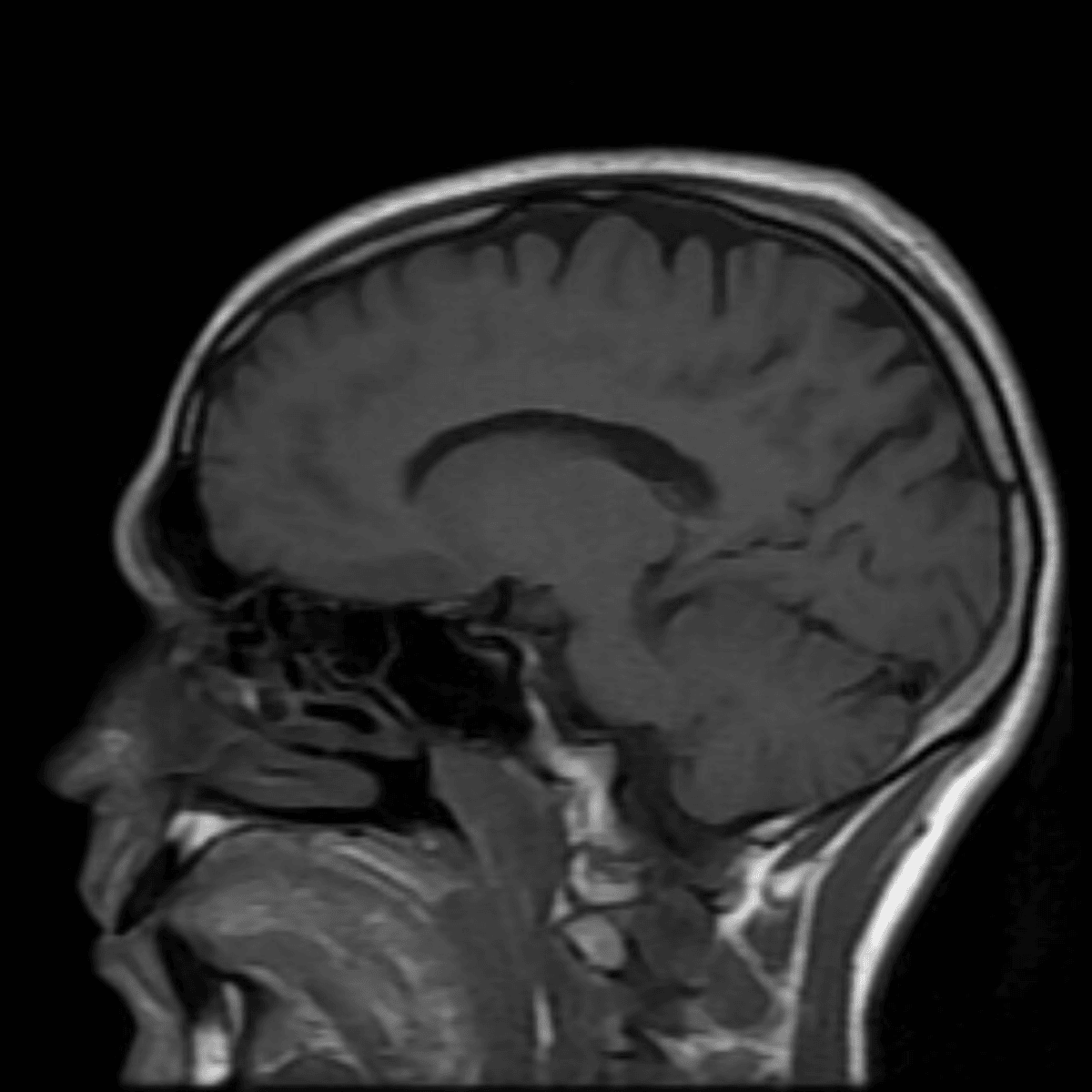
Conditions our MRI scans have found
Colloid cyst
A colloid cyst is a non-cancerous mucus-containing growth in the brain. Colloid cysts are rare and are thought to have a congenital origin. There are typically no symptoms from a colloid cyst, but sometimes they can slowly expand in size, causing headaches, nausea/vomiting, or visual changes, particularly in people over the age of 30 years old.
Coronary stenosis
Coronary stenosis is the blockage or narrowing of the arteries that supply blood to the heart muscle. It is often due to atherosclerosis, which is when plaque (cholesterol containing fatty deposits) builds up and hardens the arteries. If atherosclerosis progresses, it can block blood flow causing a heart attack or stroke.
Coronary artery calcification
Coronary artery calcification is when parts of the vessels of the heart accumulate calcium deposits. This calcification process is similar to atherosclerosis, which is when plaque (cholesterol containing fatty deposits) builds up and hardens the blood vessels, and it is associated with increased risk of cardiovascular disease (e.g. heart attack and stroke).
Degenerative changes of hip joint
The hip is a ball-and-socket joint. The ball moves in the socket, allowing the leg to rotate and move forward, backward and sideways. As an individual ages, it is common for the cartilage (thin tissue that covers bone surfaces providing smooth, friction-free movement) in the hip joint to wear down. Degenerative hip joint changes can cause symptoms such as pain, stiffness, swelling around the joint, tenderness, limited range of motion, or a sensation of catching or grinding in the joint with movement.
Degenerative changes at the temporomandibular joint
The temporomandibular joint (TMJ) is the jaw joint, located in front of each ear. The joint acts like a sliding hinge, connecting the jawbone to the skull. TMJ problems can involve the joint and the surrounding muscles. The cause of TMJ degenerative changes can include past trauma, poor posture and/or bruxism (clenched/grinding teeth).
Diffuse stranding of the subcutaneous fat throughout the abdominal wall may reflect sequela of prior abdominoplasty
Your MRI images reflect a potential history of having abdominoplasty (i.e. tummy tuck). This surgery was not indicated in your medical history. If you have had this procedure in the past, no further evaluation or follow-up is needed.

Can't find what you're looking for?
Frequently Asked Questions
Unfortunately at this time, we are unable to scan people with pacemakers. There is a risk that the MRI magnetic fields will disrupt its operation, and we don't want that.
There are many different types of implants. We will need to know more about what you have. The good news is that almost all implants are MRI-safe. There is a chance the implant will affect the images we can get from the surrounding tissues.
Yes. Almost all IUDs are MRI-safe. Regardless, we check the MRI safety of all devices. Common MRI-safe IUDs are the Mirena and the Copper T.
Yes you can. There will be extra precautions we will take to ensure your safety while in the machine, so please inform staff before entering the MRI.
Yes. This is completely safe.