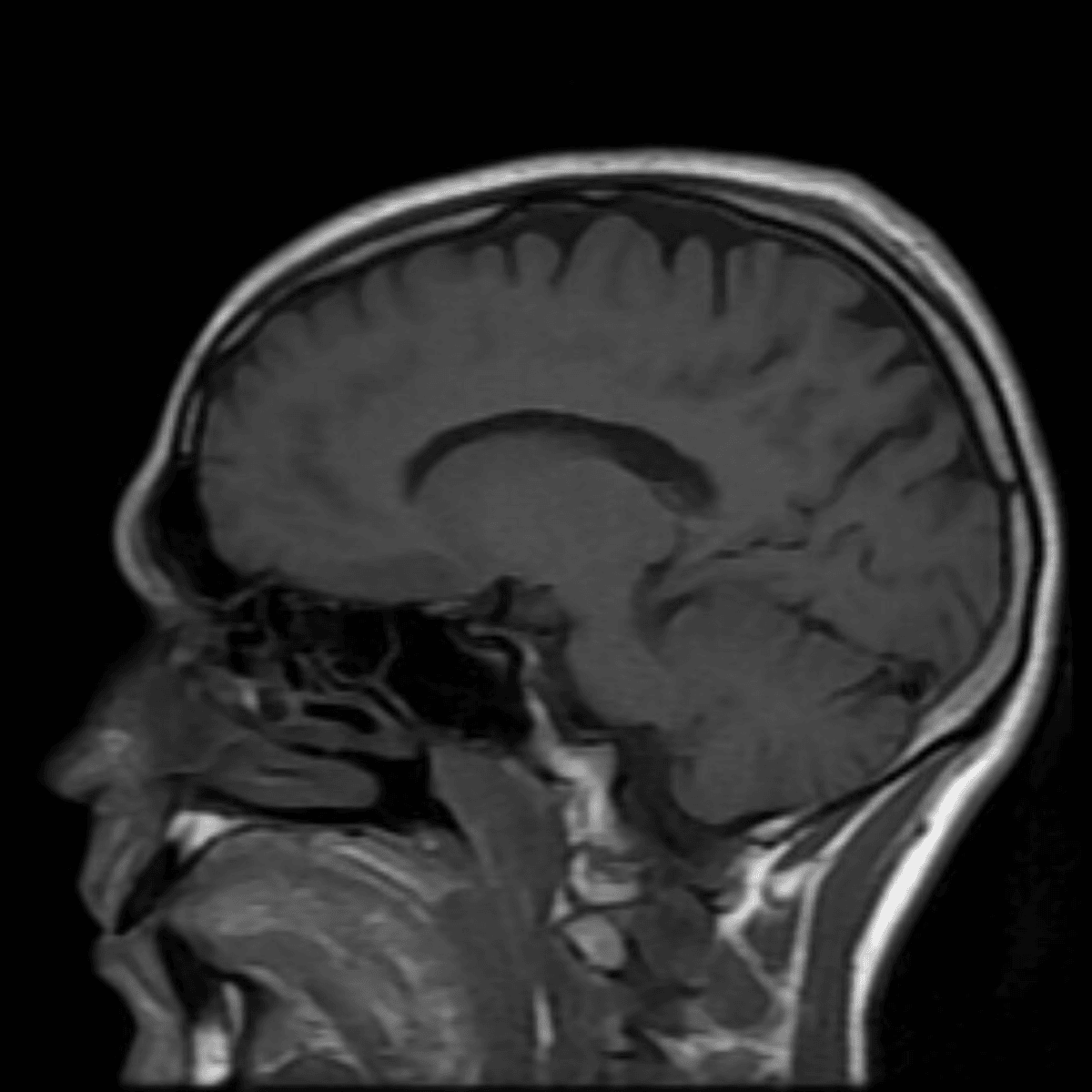
Conditions our MRI scans have found
Diastasis of the rectus abdominis musculature at the umbilicus with slight anterior protrusion of bowel
Diastasis describes when the abdominal muscles (abs) are physically separated. This can be congenital (present from birth) or from past injury (e.g. from heavy lifting), obesity or pregnancy. Part of the intestine/bowel is pushing through this weak spot in the abdominal wall. Conservative management with weight loss and exercise are advised as a first-line treatment, even if symptoms (e.g. back pain, pelvic pain, etc.) are not present.
Diastasis of the umbilicus without evidence of a fascial defect to suggest a hernia
Diastasis describes when the abdominal muscles (abs) are physically separated. This can be congenital (present from birth) or from past injury (e.g. from heavy lifting), obesity or pregnancy. This is not a hernia (when tissue, such as part of the intestine or fat, pushes through a weak spot in the abdominal wall) and thus, it does not necessarily require repair. Conservative management with weight loss and exercise are advised as a first-line treatment, even if symptoms (e.g. back pain, pelvic pain, etc.) are not present.
Diffuse abnormal appearance of the subcutaneous fat of the abdominal and pelvic wall
Subcutaneous fat is the layer of fat which lies between the skin and muscles. Based on your MRI images, there are cystic changes on the abdominal and pelvic wall. Cysts are pockets of fluid - usually cause no signs or symptoms and need no treatment. However, they may become large enough to cause pain or discomfort in the abdomen or pelvic area.
Dilatation of the extrahepatic bile duct
The extrahepatic bile duct is a tube that is outside the liver and carries bile from the liver and gallbladder to the small intestine. Dilatation is the expansion or widening of the duct. Dilatation of the extrahepatic bile duct can be due to several causes including early gallstones in the bile duct, obstruction of the common bile duct at the sphincter of Oddi, pregnancy, the presence of a cyst in the bile duct, and/or drugs (e.g. chronic opioid use). Symptoms, if present, could include right upper quadrant pain and/or jaundice.
Diverticulosis
Diverticulosis occurs when small, bulging pouches (diverticula) develop in the colon (large intestines). Most people who have diverticulosis do not have any symptoms. When one or more of these pouches become inflamed or infected, the condition is called diverticulitis.
dilated common hepatic and common bile ducts
The hepatic and common bile ducts are tubes that carry bile (fluid that helps the digestion of fats). Dilatation is the expansion or widening of the duct. Dilatation of the bile ducts can be due to several causes including early gallstones in the bile duct, obstruction of the common bile duct at the sphincter of Oddi, pregnancy, the presence of a cyst in the bile duct, and/or drugs (e.g. chronic opioid use). Symptoms, if present, could include right upper quadrant pain and/or jaundice (yellowing of the eyes/skin).

Can't find what you're looking for?
Frequently Asked Questions
Unfortunately at this time, we are unable to scan people with pacemakers. There is a risk that the MRI magnetic fields will disrupt its operation, and we don't want that.
There are many different types of implants. We will need to know more about what you have. The good news is that almost all implants are MRI-safe. There is a chance the implant will affect the images we can get from the surrounding tissues.
Yes. Almost all IUDs are MRI-safe. Regardless, we check the MRI safety of all devices. Common MRI-safe IUDs are the Mirena and the Copper T.
Yes you can. There will be extra precautions we will take to ensure your safety while in the machine, so please inform staff before entering the MRI.
Yes. This is completely safe.