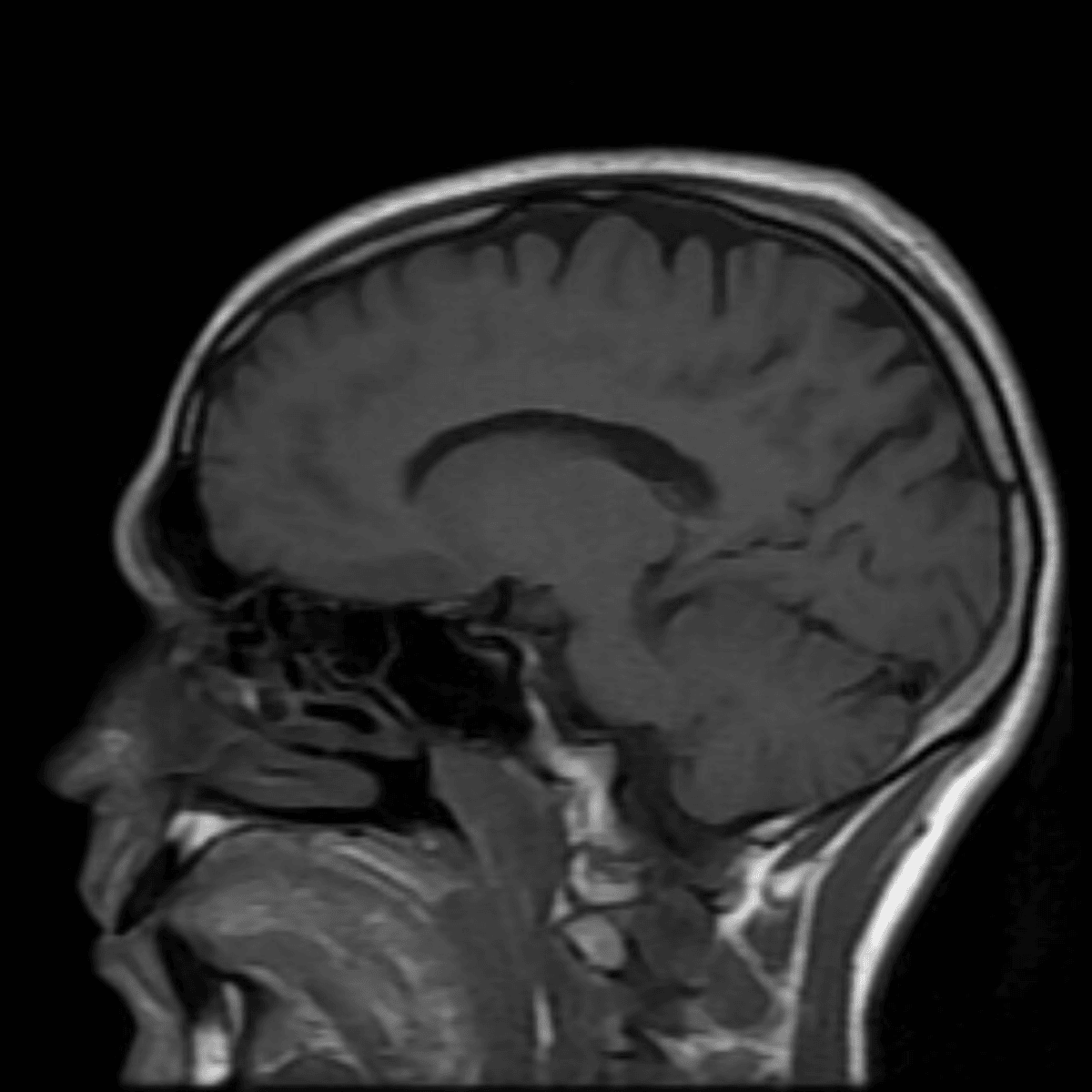
Conditions our MRI scans have found
Anteverted uterus
Like other parts of your body, the uterus can come in many different shapes or sizes. The most common position of the uterus is anteverted (cervix points towards the front of the body). This is an anatomical description that is usually asymptomatic (does not cause symptoms), with no follow-up needed. If you are having pelvic pressure or pain, then discuss this with your primary care provider or GYN for further evaluation and management.
Adenomyosis
Adenomyosis is a non-cancerous condition where endometrial tissue is inside the uterus muscle. This condition is estimated to be found in 20-35% of women. It is not clear what causes adenomyosis. The condition usually does not cause symptoms, but sometimes can cause irregular or heavy menstrual bleeding and/or pelvic pain.
Anteverted and retroflexed uterus
Like other parts of your body, the uterus can come in many different shapes or sizes. An anteverted (cervix points towards the front of the body) and retroflexed (the uterus tilts towards back of the body) position is an anatomical description. While the exact cause is unknown, it is seen exclusively in women who have had a cesarean delivery. This unusual position is thought to occur as a result of adhesions (scar tissue) fixing to the lower aspect of the uterine body and to the abdominal wall or bladder.
Anteverted and anteflexed uterus
Like other parts of your body, the uterus can come in many different shapes or sizes. The most common position of the uterus is anteverted (cervix points towards the front of the body) and anteflexed (uterus points towards front of the body). This is an anatomical description that is usually asymptomatic (does not cause symptoms), with no follow-up needed.
Adenomyoma
An adenomyoma (focal adenomyosis) is a non-cancerous abnormal growth where endometrial tissue (the innermost lining layer of the uterus) is inside the uterus muscle, resulting in a mass. Symptoms, if present, may include heavier than normal menstrual bleeding, pain with menstruation, and painful intercourse.
Adnexal scarring
The adnexa describes the region encompassing the ovary and fallopian tube. The adnexa appears scarred, likely consistent with a history of having pelvic surgery.

Can't find what you're looking for?
Frequently Asked Questions
Unfortunately at this time, we are unable to scan people with pacemakers. There is a risk that the MRI magnetic fields will disrupt its operation, and we don't want that.
There are many different types of implants. We will need to know more about what you have. The good news is that almost all implants are MRI-safe. There is a chance the implant will affect the images we can get from the surrounding tissues.
Yes. Almost all IUDs are MRI-safe. Regardless, we check the MRI safety of all devices. Common MRI-safe IUDs are the Mirena and the Copper T.
Yes you can. There will be extra precautions we will take to ensure your safety while in the machine, so please inform staff before entering the MRI.
Yes. This is completely safe.