Conditions our MRI scans have found
Acromioclavicular joint osteoarthrosis
The acromioclavicular joint (AC joint), is the point where the clavicle (collarbone), meets the acromion (the highest part of the scapula [shoulder bone]). The AC joint allows for raising the arm over the head as well as moving the arm across the body. AC joint osteoarthritis is a type of shoulder arthritis that involves degenerative (wear-and-tear) changes to the cartilage and other structures in the acromioclavicular joint. These degenerative changes can cause pain, stiffness, and weakness in the front of the shoulder.
Anterolisthesis
Anterolisthesis (also known as spondylolisthesis) is a forward slipping of the vertebra (spinal bone) over the bone below it. A pars defect is a stress fracture of the pars interarticularis, a thin bone connecting two vertebrae. Pars defects are a common injury caused by wear-and-tear and are often seen in those involved in high-risk sports (e.g. gymnastics, football, wrestling, weight lifting).
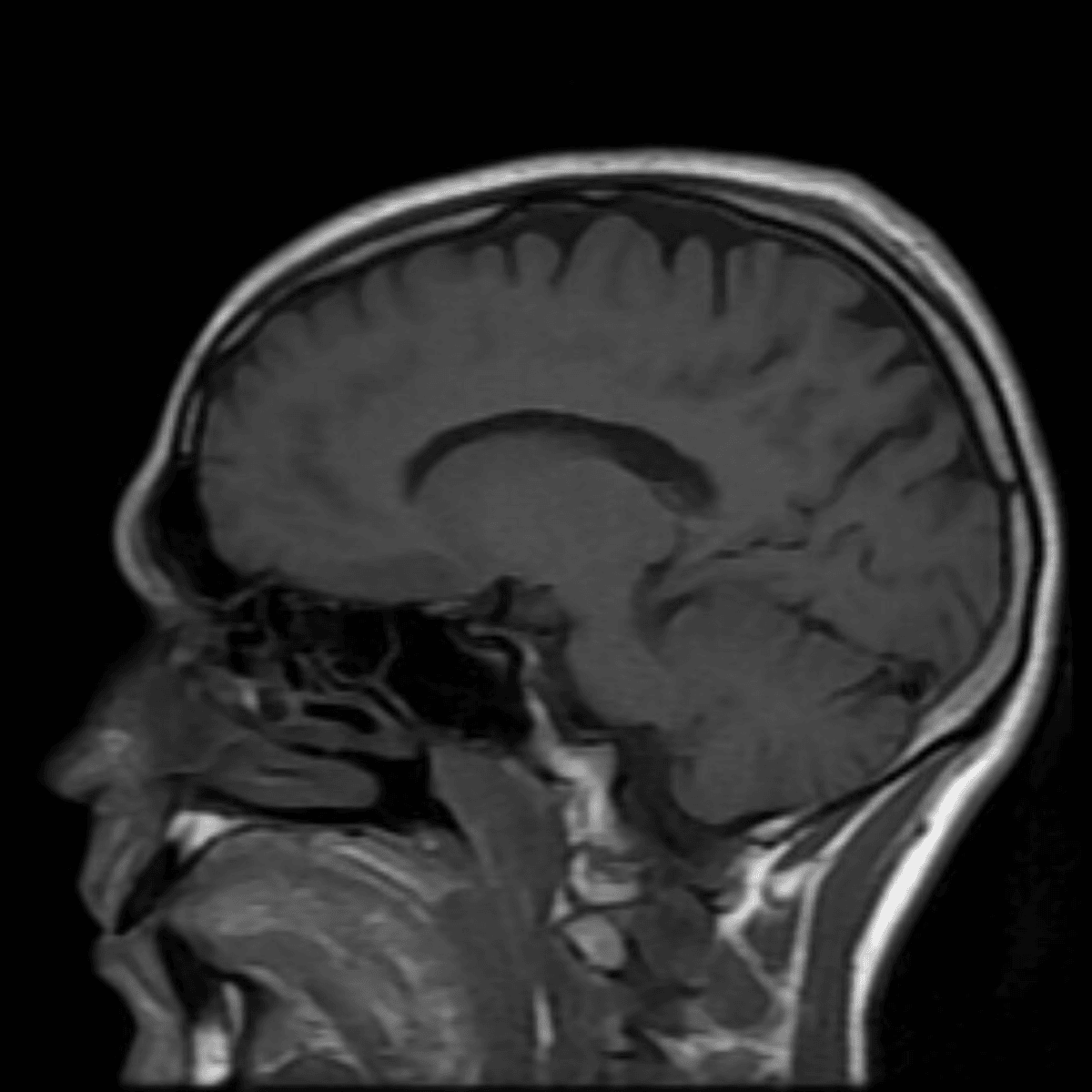
Age-related brain volume loss
Brain tissue tends to shrink at the rate of about 0.2% per year after age 30 and then accelerates after the age of 60, due to genetic, environmental, and lifestyle factors.
Arteriovenous malformation
Vascular malformation is a general term to describe when blood vessels and/or lymph vessels have an abnormal appearance or connection because of developmental variation - this is a rare but benign (non-cancerous) finding. One type of vascular malformation is an arteriovenous malformation (AVM), which is when the artery and vein are directly connected, instead of being connected by small capillaries.
Benign reactive lymph nodes
Lymph nodes can be “swollen” (reactive) on imaging. Anything that causes inflammation can cause reactive lymph nodes. Most often this is from a transient viral infection; other less common causes include bacterial infection, malignancy, autoimmune disorders, as well as medications.Lymph nodes are small bean-shaped structures that are part of the body's immune system.
Aphakia (absence of the ocular lens)
The lens of the eye is a clear, flexible structure that allows the eye to focus. The absence of the lens of the eye (a condition called aphakia) is most common in adults who have had surgical removal of the lens due to cataracts (cataract surgery) or injury to the eye from a perforating wound or ulcer. People with aphakia have relatively small pupils that tend to dilate to a lesser degree. Symptoms include blurry vision, farsightedness (the ability to see distant objects more clearly than close objects), and the loss of accommodation (trouble focusing on objects). This can be corrected by wearing glasses, contact lenses, or by surgical implant of an artificial lens. Complications of aphakia include detachment of the vitreous or retina, and glaucoma.

Can't find what you're looking for?
Frequently Asked Questions
Unfortunately at this time, we are unable to scan people with pacemakers. There is a risk that the MRI magnetic fields will disrupt its operation, and we don't want that.
There are many different types of implants. We will need to know more about what you have. The good news is that almost all implants are MRI-safe. There is a chance the implant will affect the images we can get from the surrounding tissues.
Yes. Almost all IUDs are MRI-safe. Regardless, we check the MRI safety of all devices. Common MRI-safe IUDs are the Mirena and the Copper T.
Yes you can. There will be extra precautions we will take to ensure your safety while in the machine, so please inform staff before entering the MRI.
Yes. This is completely safe.